

Dyatlov Pass Incident: What Really Happened to the 9 Hikers?
The Dyatlov Pass Incident is one of the world’s most famous unexplained mysteries. In February 1959, nine experienced Soviet hikers died in the northern Ural Mountains after abandoning their tent during severe winter conditions.
The group had been led by Igor Dyatlov, a 23-year-old engineering student. Their tent was later discovered abandoned and cut from the inside, while the hikers were found at several locations down the mountainside. Six died from hypothermia, while three suffered fatal traumatic injuries.
For decades, the circumstances created theories involving murder, secret military activity, unusual weather, infrasound, UFOs and even supernatural explanations.
But modern research points toward a much more realistic possibility.
A peer-reviewed 2021 study by Johan Gaume and Alexander M. Puzrin demonstrated that a small slab avalanche was physically plausible at the campsite. Follow-up field research also documented avalanche activity in the wider Dyatlov Pass region. Read the 2021 scientific study Read the 2022 follow-up research
However, this does not prove that scientists know exactly what happened that night.
The most responsible conclusion is that a natural mountain disaster—potentially involving a slab avalanche, severe weather and extreme cold—is a strong explanation, while some details of the final hours remain uncertain.
In this article, we examine the timeline, evidence, injuries, major theories, original investigation and modern scientific research to separate what is known from what is speculation.
This article separates documented historical evidence, scientific research and speculation surrounding the Dyatlov Pass Incident.
Scientific claims about the avalanche hypothesis are based primarily on peer-reviewed research published in Communications Earth & Environment. Historical claims should be supported by reliable archival or historical sources.
Where the evidence remains uncertain, Noor After Dark identifies the claim as a theory rather than presenting it as established fact.
Table of Contents
Quick Answer: What Happened at Dyatlov Pass?
The most evidence-supported explanation is a natural mountain disaster, potentially involving a small slab avalanche.
The hikers appear to have left their tent suddenly during dangerous winter conditions. Once outside without adequate protection, they faced extreme cold and difficult terrain. Some suffered fatal traumatic injuries, while others died from hypothermia.
Modern scientific research has demonstrated that a slab avalanche was physically plausible at the campsite. However, because there were no surviving witnesses, the exact sequence of events cannot be established with absolute certainty.
The Dyatlov Pass Incident is not scientifically proven to have been caused by a Yeti, UFO, secret military experiment or murder. A natural avalanche-related scenario is considerably better supported by current evidence.
Dyatlov Pass Incident: A Mystery That Refuses to Disappear
Nine experienced hikers entered the snowy mountains of the northern Ural region in early 1959.
They were young, trained and prepared for a difficult winter expedition.
But something went terribly wrong.
Their tent was later discovered damaged and abandoned on a remote mountain slope. The hikers had left the shelter in extremely cold conditions, and their bodies were eventually found at different locations below the campsite.
For decades, the Dyatlov Pass incident became one of the world’s most famous unexplained mysteries.
Was it an avalanche?
A sudden weather event?
A mistake caused by extreme conditions?
Or was something stranger responsible?
Modern research has provided an important scientific explanation, but the case still contains unanswered questions.
What Was the Dyatlov Pass Incident?
The Dyatlov Pass incident refers to the deaths of nine Soviet hikers during a winter expedition in the northern Ural Mountains in February 1959.
The group was led by Igor Dyatlov, an experienced student mountaineer.
Their destination was the Otorten mountain area. During the expedition, they established a tent on the slope of Kholat Saykhl, a name commonly translated from the local Mansi language as “Dead Mountain.”
Something happened during the night of February 1–2.
The group abandoned the tent and moved downhill toward a forested area.
None of the nine survived.
A later scientific investigation proposed that a small slab avalanche could have been triggered by the way the tent site was prepared and by subsequent wind-driven snow accumulation.
Who Were the Nine Dyatlov Pass Hikers?
The expedition consisted of nine people:
| Hiker | Age | Role / background |
|---|---|---|
| Igor Dyatlov | 23 | Expedition leader |
| Zinaida Kolmogorova | 22 | Experienced hiker |
| Lyudmila Dubinina | 20 | Student and expedition member |
| Yuri Doroshenko | 21 | Student |
| Rustem Slobodin | 23 | Student |
| Alexander Kolevatov | 24 | Student |
| Yuri Krivonischenko | 23 | Student |
| Nikolai Thibeaux-Brignolle | 23 | Student |
| Semyon Zolotaryov | 38 | Experienced expedition member |
The group had considerable experience with winter travel, which is one reason the incident attracted so much attention.
It was not simply a case of inexperienced travelers becoming lost.
The Timeline of the Dyatlov Pass Mystery
January 23, 1959 — The Expedition Begins
The group left Sverdlovsk for their planned skiing and hiking expedition in the northern Ural Mountains.
They were expected to complete a demanding winter route.
January 27 — The Group Reaches the Mountain Region
The expedition continued into increasingly remote terrain.
Weather and snow conditions made progress difficult.
February 1 — The Final Camp
The hikers established their tent on the slope of Kholat Saykhl.
They made a cut into the snow-covered slope while preparing the campsite.
This detail became particularly important in later scientific research.
Night of February 1–2 — Something Happens
During the night, the hikers suddenly left their tent.
According to the evidence described in later research, they moved more than a kilometer downhill toward the forest despite temperatures below approximately −25°C and strong winds.
Why would nine experienced hikers leave their shelter in such conditions?
That question became the heart of the mystery.
February 20 — Search Efforts Begin
When the group failed to return as expected, search teams were sent into the region.
February 26 — The Tent Is Found
The abandoned tent was discovered on the mountain slope.
The hikers were not inside.
Their disappearance immediately raised questions about what had happened during the night.
Following Weeks — The Bodies Are Found
Search teams eventually located all nine members of the expedition.
The locations and conditions in which they were found contributed to decades of speculation.
Why Did the Hikers Leave Their Tent?
This is perhaps the biggest question surrounding the Dyatlov Pass incident.
The hikers were in an extremely dangerous environment.
Leaving a tent during severe winter conditions would normally make survival much harder.
Yet evidence suggests they did exactly that.
One scientific explanation is that the group may have perceived an immediate threat from snow instability above the tent.
Researchers Johan Gaume and Alexander Puzrin proposed that a small slab avalanche could have developed after the hikers cut into the slope to install their tent. Strong winds may then have transported additional snow above the campsite, increasing the load over time.
Under this explanation, the danger may not have appeared immediately.
The snow could have become unstable hours later.
The Avalanche Theory Explained
In 2021, researchers Johan Gaume and Alexander M. Puzrin published a peer-reviewed study in Communications Earth & Environment examining how a slab avalanche could have affected the Dyatlov Pass campsite. Their model considered the mountain slope, snow conditions, the excavation made to place the tent, and wind-driven snow accumulation. The researchers concluded that a delayed slab-avalanche release was physically plausible under the proposed conditions.
Important: the study demonstrates that the avalanche mechanism was physically possible; it does not prove that an avalanche definitely occurred on the night of February 1–2, 1959.
Source: Gaume & Puzrin, Communications Earth & Environment (2021)
Follow-up expeditions provided additional evidence that avalanche activity occurs in the Dyatlov Pass region. In their 2022 publication, the researchers described field observations of slab avalanches and discussed their relevance to the earlier Dyatlov Pass hypothesis.
These observations strengthen the argument that avalanches are physically possible in the region, although they do not prove that a slab avalanche caused the 1959 deaths.
Source: Gaume & Puzrin, follow-up field research (2022)
According to their model, these conditions could have produced a delayed slab failure several hours after the tent was established.
This was significant because it provided a physical mechanism for an avalanche occurring after a delay, rather than immediately after the hikers altered the slope.
Did Scientists Actually Prove an Avalanche Happened?
No.
This distinction is extremely important.
The study did not prove with absolute certainty that an avalanche caused the deaths.
Instead, it demonstrated that a specific type of slab avalanche was physically plausible under the conditions reconstructed for the site.
The authors themselves stated that their model did not resolve every controversial aspect of the incident.
That means the scientifically responsible conclusion is:
A slab avalanche is a plausible explanation, not a universally proven final answer.
This is also a much better approach for a trustworthy mystery website.
What Happened After the 2021 Research?
The investigation did not simply stop with computer modeling.
Researchers returned to the region.
In 2022, follow-up expeditions documented new slab avalanches near the Dyatlov Pass area. The researchers reported observing avalanche traces on slopes less than 3 kilometers from the original tent location.
One important observation was that fresh avalanche traces could become difficult to see quickly because wind transported snow across the area.
That finding addressed one criticism of the original avalanche hypothesis: the lack of obvious avalanche evidence weeks after the event.
According to the researchers, small avalanche traces could disappear relatively quickly under severe winter conditions.
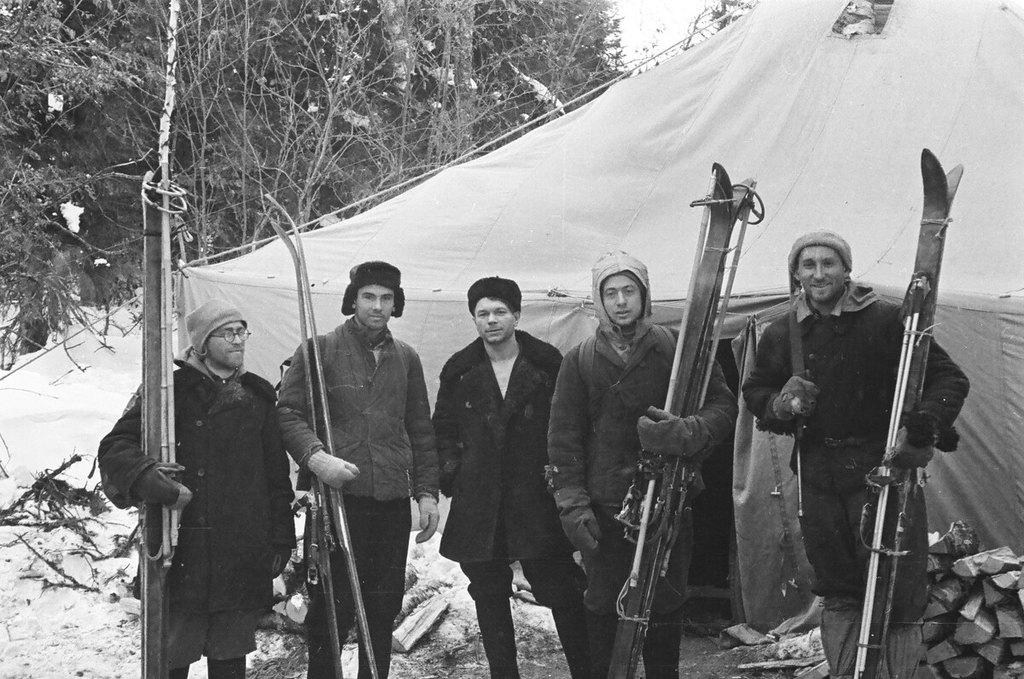
Why Was the Tent Cut?
The tent’s installation is one of the most important details in the modern scientific explanation.
The hikers made a cut into the snow-covered slope to create their campsite.
Researchers proposed that this modification could have weakened the stability of the snow structure.
Strong katabatic winds could then have transported additional snow toward the area above the tent.
Over several hours, the additional load may have contributed to a slab release.
This creates a possible sequence:
Tent installed → slope altered → wind moves snow → snow load increases → slab becomes unstable → hikers react suddenly → group leaves tent → extreme cold and difficult terrain become deadly.
Why Didn’t the Hikers Simply Stay Inside?
This remains an important unanswered question.
If the hikers believed the tent was in immediate danger, leaving it could have seemed safer than remaining inside.
Researchers proposed that a snow slab could have produced serious but non-fatal injuries while the hikers were inside the tent.
The group could then have moved downhill toward the forest.
Once separated from their shelter in extremely cold weather, however, returning to the tent would have been extremely difficult.
This is one possible reconstruction—not a proven minute-by-minute account.
The Most Famous Dyatlov Pass Theories
The incident became famous partly because so many explanations were proposed.
1. Slab Avalanche
This is one of the strongest modern scientific explanations.
The 2021 study demonstrated a physically plausible delayed slab-avalanche mechanism involving snow accumulation, local terrain and the cut made to install the tent.
Evidence level: Strong scientific plausibility.
2. Katabatic Winds
Another explanation focuses on powerful downslope winds.
The region can experience severe winter weather, and strong winds could have affected the hikers’ decision-making and the stability of snow around the campsite.
The modern avalanche model itself incorporates wind-driven snow accumulation.
Evidence level: Scientifically relevant environmental factor.
3. Extreme Weather and Hypothermia
Severe cold clearly played an important role.
The researchers noted temperatures below approximately −25°C and strong winds during the relevant period.
Once the hikers were away from their shelter, the environment itself became a major threat.
Evidence level: Well supported as an environmental danger.
4. Infrasound Theory
Some theories suggested that low-frequency sound generated by atmospheric conditions might have affected the hikers.
However, this remains speculative and has not been established as the cause of the incident.
Evidence level: Unproven theory.
5. Military-Test Theory
Another long-running theory suggests military activity may have been involved.
Reports concerning unusual lights and other details helped fuel this idea.
However, there is no established evidence that a secret military operation caused the deaths.
Evidence level: Unproven.
6. Attack by Other People
Some theories proposed that the hikers were attacked by local people or other individuals.
This theory has become part of the popular mythology surrounding the case, but it lacks convincing evidence sufficient to establish it as the explanation.
Evidence level: Unsupported as a confirmed explanation.
7. Yeti or Other Supernatural Explanations
The Dyatlov Pass story has also attracted supernatural theories.
These include claims involving mysterious creatures, paranormal events and other unexplained forces.
There is no reliable scientific evidence establishing a supernatural cause.
Evidence level: Paranormal speculation.
What Makes the Dyatlov Pass Case So Mysterious?
Even with modern research, several details continue to generate debate.
The researchers who proposed the slab-avalanche model explicitly acknowledged that their work did not address every controversial feature of the case, including questions about the hikers’ behavior, body locations and other disputed evidence.
That is why the Dyatlov Pass incident remains fascinating.
It sits between two worlds:
History: A real expedition ended in tragedy.
Science: Modern modeling provides a plausible natural explanation.
Mystery: Not every detail can be reconstructed with certainty.
Is the Dyatlov Pass Mystery Solved?
The most accurate answer is:
Partly explained, but not completely solved.
The strongest modern scientific explanation is that a delayed slab avalanche may have caused the hikers to abandon their tent, after which severe environmental conditions contributed to the deaths.
The 2021 research demonstrated how a small slab could theoretically form because of the local terrain, snow structure, the cut made for the tent and wind-driven snow accumulation.
Later field expeditions found evidence that slab avalanches do occur in the region.
But the model does not explain every detail with certainty.
Therefore, calling Dyatlov Pass “completely solved” would go beyond the evidence.
Dyatlov Pass Incident: Mystery vs. Evidence
| Popular claim | What the evidence supports |
|---|---|
| A mysterious force caused the deaths | The exact sequence remains uncertain |
| An avalanche was impossible there | Research shows a small slab avalanche was physically plausible |
| No avalanche could occur on such a slope | Snow instability can occur at slopes below the commonly assumed 30° threshold |
| The case proves a paranormal event | No reliable scientific evidence proves this |
| The mystery is completely solved | No—important questions remain |
| The hikers faced dangerous winter conditions | Strongly supported |
| Wind may have played a role | Supported in the modern physical model |
The key lesson is simple: the strangest explanation is not necessarily the best explanation.
What Really Happened at Dyatlov Pass?
We may never know every moment of that final night.
But modern research has changed the way the case can be understood.
A possible reconstruction is that the hikers established their tent on a vulnerable section of snow-covered terrain. Their work on the slope altered the snow structure. Strong winds then deposited additional snow above the tent. Hours later, a small slab may have released.
The hikers may have believed they needed to leave the tent immediately.
They moved downhill toward the forest.
In temperatures below −25°C and strong winds, their situation became increasingly dangerous.
This explanation does not require a mysterious creature, secret weapon or supernatural force.
It requires something much more frightening:
a chain of ordinary natural conditions combining in an extraordinary way.
And that may be the real horror of Dyatlov Pass.
Final Verdict
The Dyatlov Pass incident remains one of the most fascinating mysteries of the 20th century because it combines a real historical tragedy with difficult environmental conditions and unanswered questions.
For decades, theories ranged from avalanches and extreme weather to military experiments and supernatural explanations.
Modern snow science has changed the conversation.
Research published in Communications Earth & Environment demonstrated a plausible mechanism in which wind-driven snow accumulation and the way the tent was installed could have triggered a delayed slab avalanche. Later expeditions documented slab avalanches in the surrounding region.
But plausible does not mean proven.
The most responsible conclusion is therefore:
The Dyatlov Pass mystery may have a natural explanation. But the complete story remains uncertain.
And that is precisely why, more than six decades later, people are still asking:
What really happened at Dyatlov Pass?
Dyatlov Pass is only one example of the real mysteries and unexplained events explored on Noor After Dark.
The Dyatlov Pass Incident remains one of history’s most debated unexplained mysteries. If you enjoy exploring strange events that continue to raise questions, you may also be interested in the mysteries of the universe and the scientific explanation behind sleep paralysis.
Sources & Further Reading
- Johan Gaume & Alexander M. Puzrin, Communications Earth & Environment — research on the slab-avalanche mechanism.
- Johan Gaume & Alexander M. Puzrin, Communications Earth & Environment — follow-up field observations of avalanches near Dyatlov Pass.
- Nature — overview of the 2021 scientific explanation.
- Dyatlov Pass — Complete Case Files
- Lyudmila Dubinina autopsy — Case Files 355–357
- Zinaida Kolmogorova autopsy — Case Files 127–134
- Georgiy Krivonischenko autopsy — Case Files 112–119
- Yuri Doroshenko autopsy — Case Files 104–111
- Rustem Slobodin autopsy — Case Files 95–103
- Igor Dyatlov autopsy — Case Files 120–126
Frequently Asked Questions
What is the Dyatlov Pass incident?
The Dyatlov Pass incident was the 1959 death of nine hikers during a winter expedition in the northern Ural Mountains.
When did the Dyatlov Pass incident happen?
The critical events occurred during the night of February 1–2, 1959.
How many people died at Dyatlov Pass?
Nine members of the expedition died.
Where did the Dyatlov Pass incident happen?
The incident occurred in the northern Ural Mountains, near Kholat Saykhl.
What is the leading Dyatlov Pass theory?
A delayed slab avalanche is one of the strongest modern scientific explanations. Researchers modeled how local terrain, a cut made for the tent, weak snow layers and wind-driven snow accumulation could have produced such an event.
Was the Dyatlov Pass incident solved?
Not completely. Scientific research has provided a plausible natural explanation, but it does not establish every detail of the incident with certainty.
Did an avalanche cause the Dyatlov Pass deaths?
A slab avalanche is a scientifically plausible explanation, but it should not be presented as an absolutely proven fact.
Was Dyatlov Pass paranormal?
There is no reliable scientific evidence proving that a paranormal event caused the incident.