
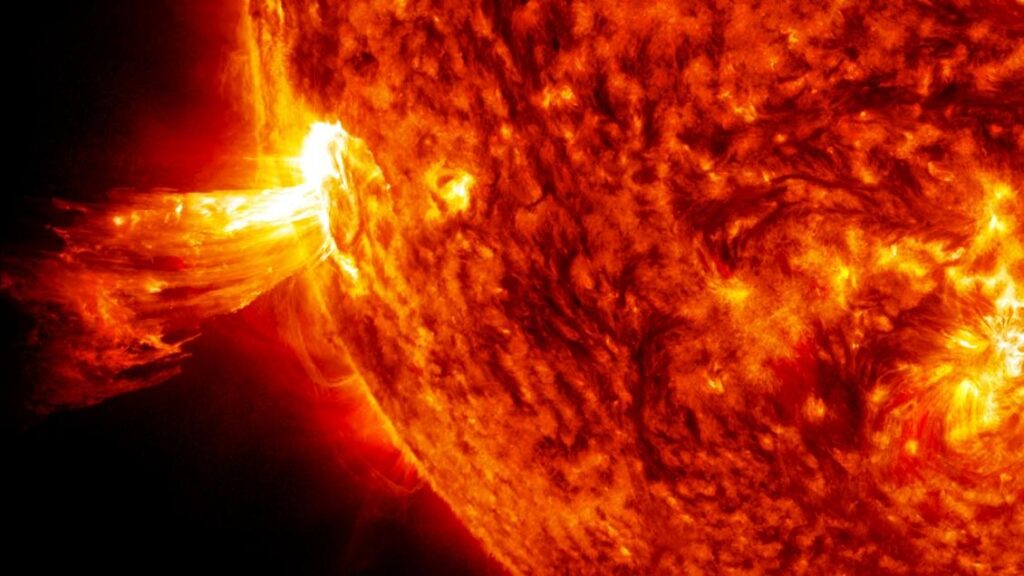
A Monster Solar Storm Is Coming? The Sun may look peaceful from Earth, but beneath its glowing surface, enormous magnetic forces are constantly building and releasing energy. A powerful solar eruption aimed at our planet could disrupt satellites, interfere with GPS navigation, threaten electrical infrastructure, and illuminate skies with spectacular auroras. Could the next extreme solar storm become a serious threat to modern civilization?
Imagine waking up one morning to discover that GPS navigation is unreliable, satellite communications are experiencing problems, radio signals are interrupted, and electrical networks are struggling to operate.
There is no hurricane approaching your city. No earthquake has shaken the ground. No asteroid is heading towards Earth.
Instead, the disturbance has come from approximately 150 million kilometers away.
The source is our own Sun.
Solar storms are natural events, but their potential consequences are becoming increasingly important as humanity depends on satellites, digital communications, electricity, and navigation systems. Scientists have already witnessed powerful solar eruptions capable of disturbing Earth’s magnetic environment.
And history suggests that an exceptionally powerful event could be far more disruptive.
But is a monster solar storm actually approaching Earth right now? And could another event like the legendary Carrington Event bring modern technology to its knees?
Let’s explore the science, historical evidence, possible dangers, and what scientists are doing to protect our planet.
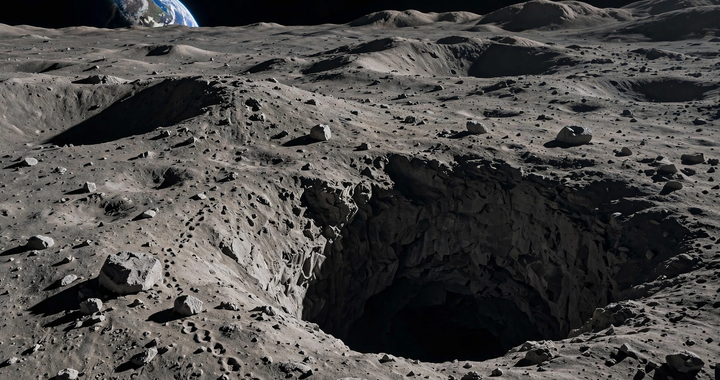
Solar storms are a reminder that Earth is part of a much larger and more mysterious universe. From the mysteries surrounding the origin and expansion of the universe to the discovery of a galaxy with no stars, space continues to challenge what scientists think they know. Even our nearest celestial neighbor, the Moon, may hold surprising secrets, including a mysterious opening that could lead to a giant underground cave. Exploring these discoveries helps us understand the powerful forces and unanswered questions that make our universe so fascinating.
A Monster Solar Storm Is Coming?
One powerful eruption from the Sun could disturb satellites, GPS navigation, radio communication and electrical networks. Discover how a solar storm travels through space and what happens when it reaches Earth.
☀️ The Solar Storm Journey
Follow the journey from the Sun to Earth’s magnetic environment.
The Sun Builds Magnetic Energy
The Sun’s magnetic field twists and changes. Active regions and sunspots can develop as energy accumulates.
A Powerful Solar Eruption Occurs
Magnetic energy is released into space. Solar flares, coronal mass ejections and energetic particles may be produced.
Three Important Solar Phenomena
Each phenomenon affects Earth in a different way.
Solar Flares
Radiation travels at light speed and can disturb radio communication.
CMEs
Huge clouds of plasma and magnetic fields travel through space.
Energetic Particles
High-energy particles can affect spacecraft and astronauts.
The Solar Material Travels Towards Earth
If a CME is directed towards our planet, it may take roughly one to three days to arrive. Actual travel time varies.
Earth’s Magnetic Field Is Disturbed
Incoming solar material interacts with Earth’s magnetosphere. A strong southward magnetic field can transfer substantial energy into Earth’s magnetic environment.
A Geomagnetic Storm Develops
The storm can disturb electrical networks, satellites, navigation systems and radio communication.
Scientists Monitor and Issue Alerts
Space weather agencies monitor incoming solar material and provide warnings to help protect critical infrastructure.
⚠️ Five Ways a Solar Storm Could Affect Earth
Modern technology depends on systems that can be vulnerable to extreme space weather.
1. Electricity Networks
Geomagnetically induced currents could interfere with transformers and power-grid operations, potentially causing regional outages.
2. Satellites
Radiation, electrical charging and increased atmospheric drag could disrupt satellite operations.
3. GPS Navigation
Ionospheric disturbances could delay or distort satellite navigation signals and reduce positioning accuracy.
4. Radio Communication
Powerful solar flares could interfere with high-frequency radio signals, particularly on the sunlit side of Earth.
5. Extraordinary Auroras
Strong geomagnetic storms can produce spectacular auroras at locations much farther from the poles than usual.
Additional Aviation Effects
Severe particle events can increase radiation exposure concerns on certain high-altitude polar routes.
📜 History’s Warning: The Carrington Event
One of the most powerful recorded geomagnetic storms in history.
September 1, 1859
Astronomer Richard Carrington observes an exceptionally bright solar flare.
September 1859
A powerful geomagnetic storm produces spectacular auroras across unusually low latitudes.
Telegraph Disruptions
Telegraph operators experience sparks, shocks and unusual electrical behaviour in their systems.
Today: A Different World
Electricity grids, satellites, GPS and global communication systems make modern society more technologically dependent.
🔭 Is a Monster Solar Storm Coming Right Now?
Understanding the difference between a real forecast and a hypothetical threat.
November 16, 2026: What Does the Latest NOAA Forecast Say?
According to NOAA’s November 16 space weather forecast, minor G1 geomagnetic storm conditions are likely on November 17–18, potentially caused by the combined influence of a coronal hole and a glancing coronal mass ejection (CME).
NOAA does not currently forecast a major or extreme geomagnetic storm during this three-day period. No minor-or-greater solar radiation storm is expected, although minor to moderate radio blackouts remain possible.
These predictions describe ordinary space weather monitoring and should not be confused with evidence that a catastrophic solar storm is approaching Earth.
Could Pakistan Be Affected?
Space weather can have consequences beyond the polar regions.
Possible effects on Pakistan
- Satellite services: Possible interference with satellite-dependent systems.
- GPS: Temporary navigation and positioning inaccuracies.
- Electricity: Potential effects on long transmission networks during sufficiently severe storms.
- Communications: Possible disruption to certain radio and satellite communication services.
- Internet: Terrestrial fibre-optic services are not automatically shut down by solar storms.
A nationwide blackout in Pakistan is not an inevitable consequence of a solar storm.
🛡️ How Can Earth Prepare?
Scientists cannot stop solar eruptions, but preparation can reduce risk.
1. Monitor the Sun
NASA spacecraft observe solar activity and eruptions.
2. Track Incoming Solar Material
Spacecraft monitor solar wind and magnetic-field conditions.
3. Issue Space Weather Warnings
NOAA provides watches, alerts and warnings.
4. Protect Critical Infrastructure
Grid and satellite operators can take precautionary measures.
5. Prepare for Possible Disruptions
Keep basic emergency supplies and follow official guidance.
❓ Frequently Asked Questions
Quick answers to important questions about solar storms.
Can a solar storm destroy Earth?
No. Solar storms cannot destroy the planet, although extreme events can disrupt important technologies.
Can a solar storm cause a worldwide blackout?
An extreme event could cause serious electrical disruptions, but a simultaneous worldwide blackout is not an established or inevitable outcome.
How long does a solar storm take to reach Earth?
Solar flare radiation reaches Earth in about eight minutes. A CME often takes around one to three days, depending on its speed.
Can solar storms affect mobile phones?
They can indirectly affect satellite-dependent services and certain communication systems. Ordinary mobile networks are not automatically shut down.
Is Pakistan safe from solar storms?
Pakistan is not immune to space weather. Its satellite, navigation and electrical infrastructure could experience effects during sufficiently severe events.
The Sun Is Powerful. Is Our Technology Ready?
An extreme solar storm is a genuine natural hazard, but a disaster is not inevitable. Understanding space weather, monitoring solar activity and protecting critical infrastructure are the keys to preparing for the Sun’s next powerful eruption.
Scientific Sources & Further Reading