
What really happens during fertilization? Most people imagine a simple moment when a sperm meets an egg. But the real story is far more precise and far more fascinating.
Within roughly a day, a remarkable sequence of biological events can take place. Sperm must undergo changes that allow them to function effectively in the female reproductive tract. One sperm may eventually interact with the egg’s protective outer layers. The egg then responds rapidly, helping prevent additional sperm from entering. The genetic material from the two reproductive cells is brought together, creating a new genetic combination.
This is not simply a race in which the “fastest sperm wins.” Fertilization depends on timing, cellular recognition, molecular interactions, and a series of tightly coordinated steps. Even before the first cell divisions begin, the biological process is already highly organized.
And there is another question that makes this microscopic event even more fascinating: how can such a tiny beginning lead toward an entirely new human life?
Science can describe the cellular mechanisms involved—from sperm capacitation and egg recognition to membrane fusion and the formation of the zygote. But the event also invites a deeper reflection on human creation, purpose, and the extraordinary complexity hidden inside something invisible to the naked eye.
In this article, we will follow the first 24-hour window of fertilization step by step, separating what modern reproductive biology can explain from the spiritual questions that science alone cannot answer.
🔬 The 24-Hour Mystery of Fertilization
Modern biology explains many of the steps. But the deeper we look, the more fascinating the unanswered questions become.
1. It Starts With Preparation
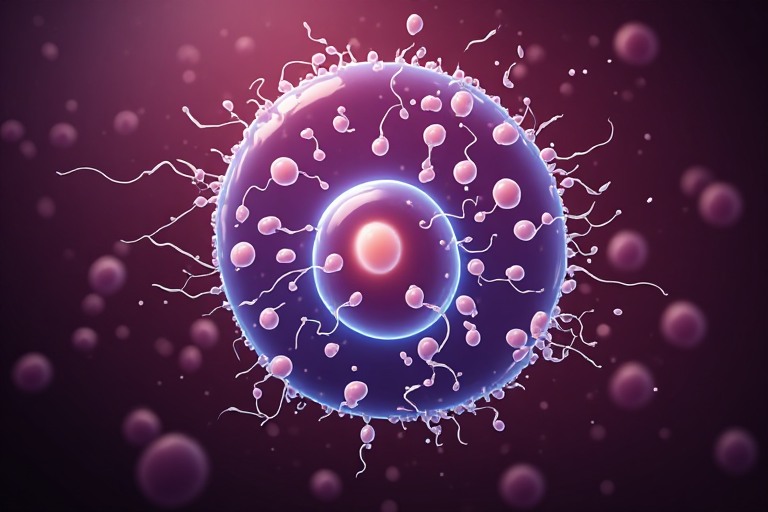
Fertilization does not begin at the exact moment sperm meets the egg. Sperm undergo changes called capacitation. These changes help them become capable of fertilizing the egg.
2. The Sperm Changes Its Behavior
Capacitated sperm can develop a stronger, more specialized movement called hyperactivation. This helps sperm interact with the egg and its surrounding structures.
3. The Egg Is Not Just Waiting
The egg is surrounded by protective structures, including the zona pellucida. Sperm–egg interaction involves specific molecules on both cells.
4. Recognition Is Molecular
Scientists know that proteins and other molecules help sperm and egg recognize, bind to, and interact with each other. But the complete molecular picture is still being investigated.
5. A Scientific Mystery Remains
We understand many parts of sperm–egg recognition. Yet researchers still do not know every molecule involved in recognition, binding, and fusion. Some important mechanisms remain an active research area.
6. The Acrosome Reaction
After the appropriate interactions, the sperm undergoes the acrosome reaction. This changes the sperm head and releases molecules involved in interaction with the egg’s surrounding coat.
7. The Egg Is Activated
When fertilization occurs, signals inside the egg change rapidly. A major event is a rise in intracellular calcium. This helps activate the egg and start a cascade of cellular events.
8. The Egg Closes the Door
The egg quickly activates mechanisms that make additional sperm entry difficult. This is called the block to polyspermy. It is essential because normal development requires the correct chromosome complement.
9. Two Genetic Contributions
The sperm and egg each contribute a haploid set of chromosomes. Their genetic material is brought together as development begins. This creates a new genetic combination.
10. A New Cellular Beginning
Following fertilization, the resulting cell is called a zygote. The zygote then begins the developmental processes that lead to early embryonic cell divisions.
11. The “Fastest Sperm Wins” Idea Is Too Simple
Fertilization is not simply a race. Successful fertilization depends on timing, sperm preparation, molecular interactions, cellular signaling, and egg responses.
12. What Science Still Cannot Fully Answer
Biology can investigate the molecules, cells, signals, and genetic events. But it cannot experimentally settle questions such as: Why does existence have meaning? What is the ultimate purpose of human life? Are there spiritual realities beyond physical measurement?
13. The Islamic Reflection
The Qur’an repeatedly directs attention to human creation and development. For example, Qur’an 23:12–14 describes stages beginning with a nutfah and continuing through later stages of development.
14. Science and Faith Ask Different Questions
Science asks: How does this biological process work?
Spiritual reflection asks questions such as: What does human existence mean, and what is our purpose?
15. The Deeper Mystery
The microscope can reveal extraordinary biological complexity. It can describe mechanisms. It cannot, by itself, determine the ultimate meaning of those mechanisms. That question belongs to philosophy, theology, and personal belief.
Modern reproductive biology has uncovered an astonishing amount about fertilization. Yet some molecular details remain under investigation. And questions about ultimate purpose cannot be answered by biology alone. Science can describe the beginning. Faith can give that beginning spiritual meaning.
Fertilization is only the beginning of an extraordinary biological journey. Once the sperm and egg have successfully combined, the newly formed zygote begins a series of changes that eventually lead to early embryonic development. To explore what happens next and how human development progresses from the first cell onward, read our detailed guide on How Is a Baby Formed? Modern Science and Islam Explained and The Complete Chronological Order Of Our Life In Islam.
Scientific references
- NCBI Bookshelf – Embryology: Fertilization
Covers capacitation, sperm–egg interaction, acrosome reaction, egg activation, prevention of polyspermy, and zygote formation.
Read the NCBI reference - NCBI Bookshelf – Molecular Biology of the Cell: Fertilization
Detailed explanation of sperm–egg fusion, calcium signaling, cortical reaction, pronuclei, and the first division of the zygote.
Read the NCBI chapter - NCBI Bookshelf – Developmental Biology: Fertilization
Explains the major stages: sperm–egg recognition, regulation of sperm entry, genetic material, and activation of development.
Read the Developmental Biology chapter - NCBI Bookshelf – Embryology, Week 1
Useful for explaining the zygote, chromosome number, early cell divisions, and the first days following fertilization.
Read the Week 1 reference
Qur’an reference
- Qur’an 23:12–14 — Surah Al-Mu’minun
These verses describe stages of human creation, including the nutfah (drop) and subsequent stages. For your article, present this as a Qur’anic/spiritual perspective, rather than claiming that the verses are a technical modern embryology textbook.
Qur’an 23:12–14