
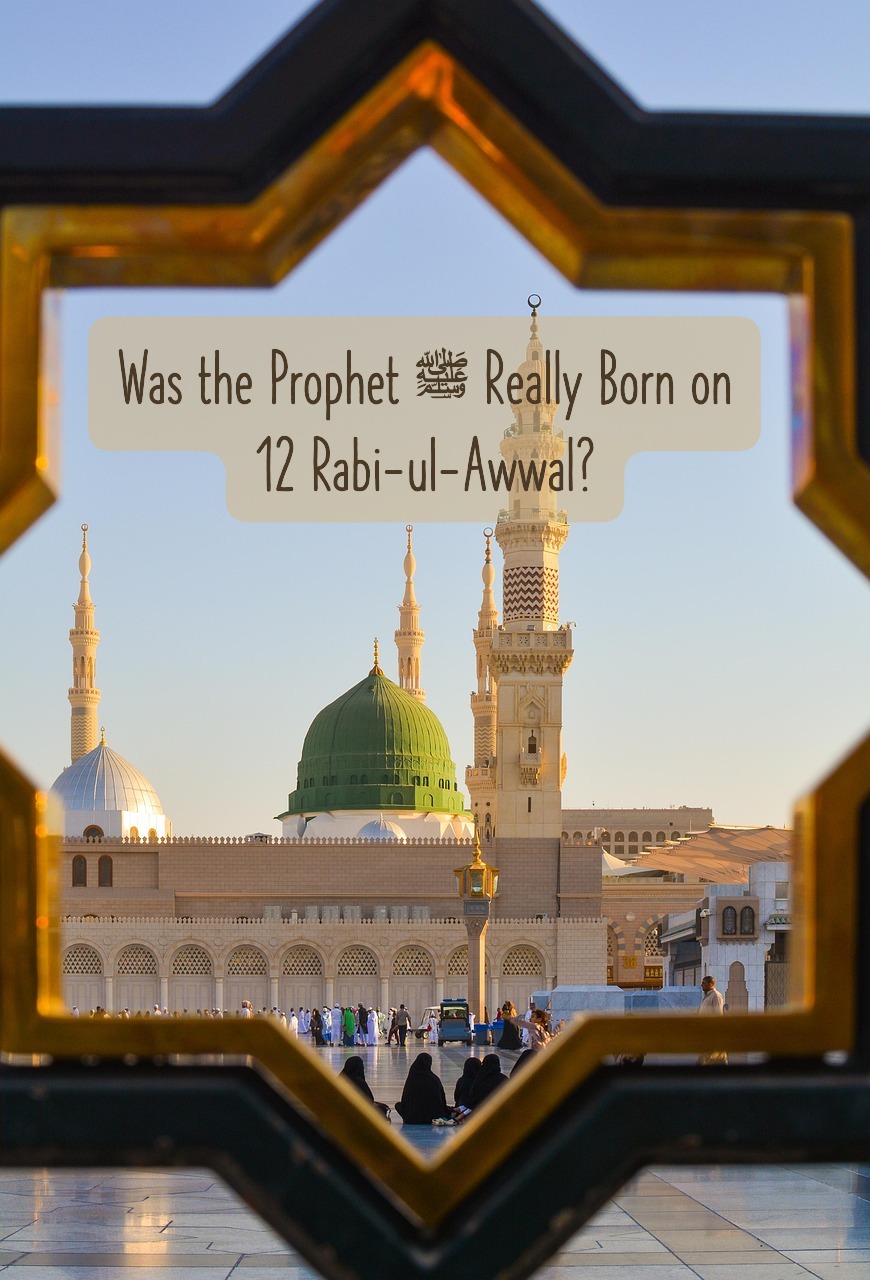
12 Rabi-ul-Awwal is one of the most well-known dates in the Islamic calendar. In many Muslim communities, it is associated with the birth of Prophet Muhammad ﷺ and is observed as Eid Milad-un-Nabi or Mawlid.
But there is an important historical question:
Was the Prophet Muhammad ﷺ definitely born on 12 Rabi-ul-Awwal?
The answer is more complicated than many people realize.
Classical historians and scholars recorded different opinions about the exact date of his birth. The commonly cited opinion is 12 Rabi-ul-Awwal, but other scholars have preferred dates such as 8th or 9th Rabi-ul-Awwal.
This makes 12 Rabi-ul-Awwal not only an important date in Muslim history but also an interesting subject of historical and astronomical investigation.
Table of Contents
12 Rabi-ul-Awwal 2026 — Which Day Is It?
The Islamic calendar shows two different dates. Saudi dates are shown as the base Hijri calendar. South Asian dates use the configured regional adjustment. Local moon-sighting announcements may differ by one day.
For 1448 AH, Saudi calendar calculations place 12 Rabi-ul-Awwal around Tuesday, 25 August 2026. In South Asia/Pakistan, 12 Rabi-ul-Awwal is around Wednesday, 26 August 2026.
Although the final Islamic date in Pakistan depends on the beginning of Rabi-ul-Awwal being established through the country’s moon-sighting process.
Pakistan follows the announcements of the Central Ruet-e-Hilal Committee for official lunar dates. Recent Islamic months have demonstrated why calculated dates and officially announced dates can sometimes differ.
Why Is 12 Rabi-ul-Awwal So Important?
Rabi-ul-Awwal is the third month of the Islamic calendar.
It is especially significant in Muslim history because major events connected with the life of Prophet Muhammad ﷺ occurred during this month.
The Prophet ﷺ was born in Makkah in the Year of the Elephant, according to the established Seerah tradition. However, historians differed about the precise day of Rabi-ul-Awwal on which his birth occurred.
The famous traditional position identifies the date as:
12 Rabi-ul-Awwal.
But this should be described as a well-known historical opinion, rather than an undisputed fact.
The Mystery of the Prophet Muhammad’s ﷺ Exact Birth Date
This is one of the most interesting questions in Seerah:
If 12 Rabi-ul-Awwal is so famous, why do scholars disagree about it?
The reason is that the earliest historical sources do not give us one universally agreed date.
Different reports and historical works mention several dates, including:
- 1 Rabi-ul-Awwal
- 2 Rabi-ul-Awwal
- 8 Rabi-ul-Awwal
- 9 Rabi-ul-Awwal
- 10 Rabi-ul-Awwal
- 12 Rabi-ul-Awwal
The 12th is among the most famous opinions, but other scholars considered different dates stronger.
That is the real historical mystery—not that the Prophet’s ﷺ birth is mysterious, but that the exact calendar date was not preserved with certainty in the surviving historical record.
What Day Was the Prophet Muhammad ﷺ Born?
One important fact is much stronger than the exact date.
The Prophet Muhammad ﷺ said that Monday was the day on which he was born.
We are pleased with Allah as the Lord, with Islam as our Code of Life, with Muhammad as the Messenger and with our pledge (to you for willing and cheerful submission) as a (sacred) commitment. He was then asked about perpetual fasting, whereupon he said: He neither fasted nor did he break it, or he did not fast and he did not break it. He was then asked about fasting for two days and breaking one day. He (the Holy Prophet) said: And who has strength enough to do it? He was asked about fasting for a day and breaking for two days, whereupon he said: May Allah bestow upon us strength to do it. He was then asked about fasting for a day and breaking on the other, whereupon he said: That is the fasting of my brother David (peace be upon him). He was then asked about fasting on Monday, whereupon he said: It was the day on which I was born. on which I was commissioned with prophethood or revelation was sent to me, (and he further) said: Three days’ fasting every month and of the whole of Ramadan every year is a perpetual fast. He was asked about fasting on the day of ‘Arafa (9th of Dhu’I-Hijja), whereupon he said: It expiates the sins of the preceding year and the coming year. He was asked about fasting on the day of ‘Ashura (10th of Muharram), whereupon be said: It expiates the sins of the preceding year. (Imam Muslim said that in this hadith there is a) narration of Imam Shu’ba that he was asked about fasting on Monday and Thursday, but we (Imam Muslim) did not mention Thursday for we found it as an error (in reporting).
Therefore:
Day of the week: Monday — strongly established.
Exact date of Rabi-ul-Awwal: disputed.
This distinction is important when writing about the subject.
Was He Really Born on 12 Rabi-ul-Awwal?
The famous opinion: Yes
The early biographer Ibn Ishaq (d. 150 AH) is commonly cited as giving the Prophet Muhammad ﷺ’s birth as Monday, 12 Rabi-ul-Awwal, in the Year of the Elephant.
Ibn Ishaq’s Sirat Rasul Allah is one of the earliest major surviving works of Seerah. His report became extremely influential in later Seerah literature.
The specific date comes from Seerah/historical transmission, especially the tradition associated with Ibn Ishaq, and it was subsequently repeated by later scholars and historians.
Some historical reports also attributed this date to Jabir and Ibn Abbas رضي الله عنهما.
Because of this historical tradition, 12 Rabi-ul-Awwal became the date most commonly associated with the Prophet’s ﷺ birth.
But there is another side
A number of scholars and researchers questioned whether 12 Rabi-ul-Awwal could correspond with the Monday established in the hadith when reconstructed astronomically.
Some researchers therefore preferred 8th or 9th Rabi-ul-Awwal, with the 9th becoming a particularly notable alternative.
So the responsible conclusion is:
12 Rabi-ul-Awwal is a famous traditional opinion, but the exact date of the Prophet’s ﷺ birth is not established with absolute certainty.
The Astronomical Mystery Behind 12 Rabi-ul-Awwal
This is where Seerah history becomes especially fascinating.
The Islamic calendar is lunar, while modern historical dating often uses the solar calendar.
Researchers have attempted to reconstruct the lunar calendar of the Year of the Elephant using astronomical calculations.
Some concluded that the Monday mentioned in the reports is more consistent with 9 Rabi-ul-Awwal rather than 12 Rabi-ul-Awwal.
One modern scholarly summary reports the astronomical research of Mahmoud Pasha, who placed the birth on 9 Rabi-ul-Awwal, corresponding approximately to April 571 CE.
However, astronomical reconstruction of a sixth-century lunar calendar is not the same thing as a directly preserved historical report.
That is why the subject remains debated.
What Happened in the Year of the Prophet’s ﷺ Birth?
The Prophet Muhammad ﷺ was born during the period known as the Year of the Elephant.
This name comes from the famous expedition associated with Abraha, the ruler of Yemen, who marched toward Makkah with an army that included elephants.
The Qur’an refers to this event in Surah Al-Fil:
Have you not seen ˹O Prophet˺ how your Lord dealt with the Army of the Elephant?
Did He not frustrate their scheme?
For He sent against them flocks of birds,
that pelted them with stones of baked clay,
leaving them like chewed up straw.
According to the traditional Seerah account, Abraha wanted to divert Arab pilgrimage toward a magnificent church he had established in Yemen.
When this did not achieve his intended purpose, he marched toward Makkah.
His army included elephants.
The people of Makkah could not match such an army militarily.
But the Qur’an describes how Allah dealt with the companions of the elephant in a completely different way.
Surah Al-Fil tells the event in five powerful verses.
This is one of the most remarkable historical events connected with the period surrounding the Prophet’s ﷺ birth.
The event became a major landmark in Arabian history.
What Does the Qur’an Say About the Prophet Muhammad ﷺ?
The Qur’an does not give the exact date of his birth.
Instead, it emphasizes his mission, character and role as Allah’s Messenger.
Allah says:
We have sent you ˹O Prophet˺ only as a mercy for the whole world.
The Qur’an also describes the Prophet ﷺ as “an excellent example” for believers. Qur’an 33:21
Therefore, the Qur’anic focus is not on celebrating a particular numerical date, but on understanding and following the Messenger’s ﷺ message and example.
Is 12 Rabi-ul-Awwal an Eid?
This question requires care.
In many Muslim communities, 12 Rabi-ul-Awwal is observed as Mawlid or Eid Milad-un-Nabi.
However, Muslims and scholars differ over the religious status and manner of observing Mawlid.
What is universally important is learning the Seerah of Prophet Muhammad ﷺ, sending blessings upon him, understanding his teachings, and following his example.
The Seerah of Prophet Muhammad ﷺ
Below is the table including the Seerah of Prophet Muhammad ﷺ
| # | Heading | Age/Period | Event | Details |
|---|---|---|---|---|
| 1 | Lineage | Before birth | Ancestry | Muhammad ﷺ was from Quraysh, specifically Banu Hashim. |
| 2 | Father | Before birth | Abdullah | His father was Abdullah ibn Abd al-Muttalib. |
| 3 | Mother | Before birth | Aminah | His mother was Aminah bint Wahb. |
| 4 | Birth | c. 570/571 CE | Makkah | He was born in Makkah, traditionally in the Year of the Elephant. |
| 5 | Date | Birth | Rabi-ul-Awwal | 12 Rabi-ul-Awwal is a famous traditional opinion, but the exact date is disputed. |
| 6 | Day | Birth | Monday | The Prophet ﷺ explicitly stated that Monday was the day of his birth. |
| 7 | Elephant | Birth period | Year of the Elephant | The Qur’an describes the People of the Elephant in Surah Al-Fil. |
| 8 | Halimah | Infancy | Fosterage | Classical Seerah records that he was nursed/fostered by Halimah al-Sa’diyyah. |
| 9 | Mother | Childhood | Aminah | He lived with his mother during his early childhood. |
| 10 | Orphanhood | c. 6 | Mother’s death | Aminah died at Al-Abwa, according to the classical Seerah. |
| 11 | Grandfather | c. 6 | Abd al-Muttalib | His grandfather cared for him after his mother’s death. |
| 12 | Guardian | c. 8 | Abu Talib | After his grandfather died, his uncle Abu Talib became his guardian. |
| 13 | Shepherd | Youth | Shepherding | Hadith confirms that prophets, including the Prophet ﷺ, worked as shepherds. |
| 14 | Character | Youth | Trustworthiness | He became known for honesty and trustworthiness; Al-Amin is a well-known Seerah designation. |
| 15 | Trade | Youth | Commerce | He participated in trade before prophethood. |
| 16 | Marriage | c. 25 | Khadijah | He married Khadijah رضي الله عنها. |
| 17 | Family | Marriage | Children | Classical sources record children including Al-Qasim, Zaynab, Ruqayyah, Umm Kulthum, Fatimah and Abdullah. |
| 18 | Ka’bah | c. 35 | Black Stone | Seerah reports describe his role in resolving the dispute over placing the Black Stone during reconstruction of the Ka’bah. |
| 19 | Hira | Before 40 | Seclusion | He would retreat to the Cave of Hira before revelation. |
| 20 | Revelation | 40 | First revelation | Jibril عليه السلام came to him and revelation began. |
| # | Heading | Age/Period | Event | Details |
|---|---|---|---|---|
| 21 | Prophethood | 40 | Mission begins | Revelation began when he was 40. |
| 22 | Jibril | 40 | First encounter | Angel Jibril عليه السلام brought revelation. |
| 23 | Al-Alaq | 40 | First verses | The first revealed verses are traditionally identified as Qur’an 96:1–5. |
| 24 | Khadijah | 40 | Support | Khadijah رضي الله عنها comforted him after the first revelation. |
| 25 | Waraqah | 40 | Confirmation | Waraqah ibn Nawfal recognized the significance of the revelation. |
| 26 | Da’wah | 40+ | Calling to Islam | The central message was worship of Allah alone. |
| 27 | Secret | Early Makkah | Early believers | The earliest Muslims initially accepted Islam privately. |
| 28 | Public | Early Makkah | Open preaching | Allah commanded the Prophet ﷺ to warn his close relatives and publicly proclaim the message. |
| 29 | Persecution | Makkah | Quraysh opposition | Quraysh opposed the message and persecuted Muslims. |
| 30 | Abyssinia | Makkah | Migration | Some Muslims migrated to Abyssinia seeking protection. |
| 31 | Hamzah | Makkah | Acceptance | Hamzah رضي الله عنه accepted Islam. |
| 32 | Umar | Makkah | Acceptance | Umar رضي الله عنه accepted Islam. |
| 33 | Boycott | Makkah | Social blockade | Banu Hashim and supporters experienced a severe boycott. |
| 34 | Suffering | Makkah | Hardship | The Muslim community endured severe persecution and hardship. |
| 35 | Loss | c. 619 | Khadijah | Khadijah رضي الله عنها died. |
| 36 | Loss | c. 619 | Abu Talib | Abu Talib died. |
| 37 | Sorrow | c. 619 | Year of Sorrow | This period became known in Seerah as the Year of Sorrow. |
| 38 | Ta’if | Makkah period | Journey | The Prophet ﷺ travelled to Ta’if seeking support and calling its people to Islam. |
| 39 | Isra | Makkah period | Night Journey | Allah took His servant from Masjid al-Haram to Masjid al-Aqsa. |
| 40 | Mi’raj | Makkah period | Ascension | Authentic Hadith describe his ascent through the heavens. |
| 41 | Prayer | Mi’raj | Salah | The five daily prayers became obligatory in the established Mi’raj tradition. |
| 42 | Aqabah | Before Hijrah | Pledges | People from Yathrib pledged allegiance to the Prophet ﷺ. |
| # | Heading | Period | Event | Details |
|---|---|---|---|---|
| 43 | Hijrah | 622 CE | Migration | The Prophet ﷺ migrated from Makkah toward Madinah. |
| 44 | Companion | Hijrah | Abu Bakr | Abu Bakr رضي الله عنه accompanied him. |
| 45 | Thawr | Hijrah | Cave | They stayed in the Cave of Thawr during the journey. |
| 46 | Quba | Hijrah | Arrival | The Prophet ﷺ stayed at Quba before entering Madinah. |
| 47 | Madinah | Hijrah | Arrival | He entered Yathrib, which became known as Madinah. |
| 48 | Mosque | Early Madinah | Masjid Nabawi | The Prophet ﷺ established his mosque in Madinah. |
| 49 | Brotherhood | Early Madinah | Muhajirun & Ansar | Brotherhood was established between emigrants and helpers. |
| 50 | Community | Early Madinah | Society | A Muslim community developed in Madinah. |
| 51 | Qiblah | 2 AH | Direction | The prayer direction changed toward the Ka’bah. |
| 52 | Ramadan | 2 AH | Fasting | Ramadan fasting became obligatory. |
| # | Heading | AH | Event | Details |
|---|---|---|---|---|
| 53 | Badr | 2 | Battle | Major confrontation between Muslims and Quraysh. |
| 54 | Victory | 2 | Badr | Muslims achieved a major victory. |
| 55 | Uhud | 3 | Battle | Muslims faced Quraysh at Uhud. |
| 56 | Hamzah | 3 | Martyrdom | Hamzah رضي الله عنه was killed at Uhud. |
| 57 | Khandaq | 5 | Trench | A confederate army attacked Madinah; Muslims used the trench strategy. |
| 58 | Ahzab | 5 | Confederates | The Qur’an records this major crisis. |
| 59 | Hudaybiyyah | 6 | Treaty | Muslims and Quraysh reached a peace agreement. |
| 60 | Ridwan | 6 | Pledge | Companions pledged allegiance beneath the tree. |
| 61 | Khaybar | 7 | Expedition | The events of Khaybar occurred. |
| 62 | Letters | 6–7 | Rulers | The Prophet ﷺ sent invitations to rulers. |
| 63 | Mu’tah | 8 | Expedition | Major confrontation in the Levant region. |
| 64 | Makkah | 8 | Conquest | Muslims entered Makkah. |
| 65 | Ka’bah | 8 | Purification | Idols were removed from the Ka’bah. |
| 66 | Hunayn | 8 | Battle | Muslims faced Hawazin and Thaqif. |
| 67 | Ta’if | 8 | Campaign | Events followed the Battle of Hunayn. |
| 68 | Tabuk | 9 | Expedition | The Prophet ﷺ led the expedition toward Tabuk. |
| 69 | Delegations | 9 | Arabian tribes | Numerous delegations came to Madinah. |
| 70 | Hajj | 9 | Pilgrimage | Abu Bakr رضي الله عنه led the pilgrimage delegation. |
| 71 | Tawbah | 9 | Revelation | Surah At-Tawbah addressed major issues surrounding treaties and the pilgrimage. |
| # | Heading | Period | Event | Details |
|---|---|---|---|---|
| 72 | Farewell | 10 AH | Final Hajj | The Prophet ﷺ performed his final major pilgrimage. |
| 73 | Arafah | 10 AH | Sermon | Major teachings were delivered during the Farewell Hajj. |
| 74 | Rights | 10 AH | Human dignity | His final teachings emphasized rights, justice and responsibility. |
| 75 | Completion | 10 AH | Religion | Qur’an 5:3 contains the famous declaration concerning completion of the religion. |
| 76 | Illness | 11 AH | Final illness | The Prophet ﷺ became seriously ill. |
| 77 | Prayer | 11 AH | Abu Bakr | Abu Bakr رضي الله عنه was instructed to lead the prayer during the Prophet’s ﷺ illness. |
| 78 | Passing | 11 AH | Wisal | The Prophet ﷺ passed away in Madinah. |
| 79 | Age | 11 AH | 63 years | Sahih al-Bukhari records his age at Wisal as 63. |
| 80 | Burial | 11 AH | Madinah | He was buried in the chamber where he passed away. |
| 81 | Legacy | After death | Sunnah | His teachings, example and Sunnah became foundational to Muslim life. |
Conclusion
12 Rabi-ul-Awwal is a famous traditional date associated with the birth of Prophet Muhammad ﷺ, but the exact birth date is historically disputed. The strongest direct evidence from an authentic Hadith establishes that The Prophet Muhammad ﷺ was born on Monday.
The Qur’an does not specify the date of his birth. The Qur’an does, however, establish the significance of his mission, his character, and his example.
Understanding the life and history of Prophet Muhammad ﷺ requires careful study of authentic Islamic sources and historical reports. To continue learning about the Prophet ﷺ, explore the beautiful names of Muhammad ﷺ and the extraordinary event of Isra and Miraj.
FAQs
When is 12 Rabi-ul-Awwal 2026 in Pakistan?
It is expected to fall on Wednesday, 26 August 2026, depending on the beginning of Rabi-ul-Awwal according to the local lunar calendar.
Was Prophet Muhammad ﷺ born on 12 Rabi-ul-Awwal?
12 Rabi-ul-Awwal is a famous historical opinion, but the exact birth date is disputed among scholars and historians.
What day was Prophet Muhammad ﷺ born?
The authentic hadith establishes Monday as the day of his birth.
Is 12 Rabi-ul-Awwal the date of the Prophet’s ﷺ Wisal?
The famous historical opinion says yes, but the precise date of his wisal is also disputed among scholars.