

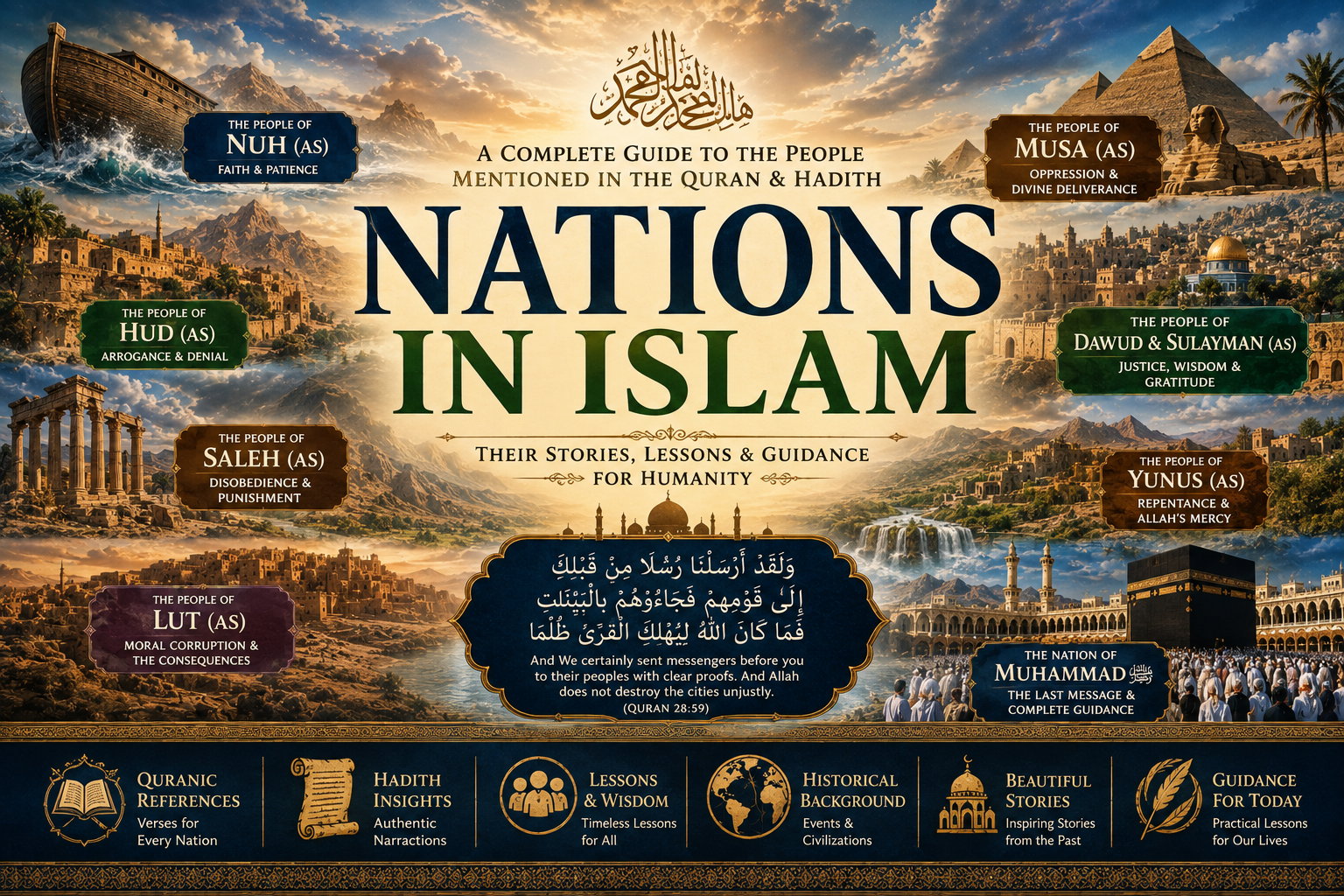
All nations mentioned in Islam are a fascinating subject that takes us through the history of humanity, from the earliest generations to the time of Prophet Muhammad ﷺ. The Qur’an describes many nations, peoples, tribes, and communities and tells us how they responded to the message of Allah.
Some accepted the truth and followed their prophets, while others rejected the message and faced the consequences of their actions.
Among the best-known nations mentioned in the Qur’an are the people of Nuh, ‘Ad, Thamud, the people of Ibrahim, the people of Lut, Madyan, the people of Pharaoh, Bani Israel, Saba, the people of Tubba‘ and others.
The Qur’an also mentions religious communities such as the Jews, Christians, Sabians and Magians, as well as tribes and communities that existed during the lifetime of Prophet Muhammad ﷺ.
However, an important distinction is necessary.
Not every group mentioned in the Qur’an is a “nation.”
Some are:
- nations or peoples;
- tribes;
- clans;
- religious communities;
- believers;
- disbelievers;
- hypocrites;
- armies;
- residents of particular towns;
- groups involved in a particular event.
This master table therefore separates these categories instead of treating every named group as an independent nation.
This article brings the major nations and communities mentioned in the Quran into one guide. It also includes important information found in authentic Hadith. The information is to the point and easy to understand.
Note:
- The Arabic word Qawm (قوم) generally refers to a people, community or group. Depending on context, it can refer to a particular people associated with a prophet.
- The word ummah (أمة) can also refer to a community or nation, depending on context. Therefore, “nation,” “people,” “community,” “tribe,” and “qawm” should not always be treated as exact synonyms.
Table of Contents
All Nations mentioned in Islam
Allah says that there were messengers whose stories were told to Prophet Muhammad ﷺ and others whose stories were not told to him. Therefore, all nations mentioned in Islam cannot mean every nation that ever existed. Instead, this guide focuses on the nations, peoples, tribes, and communities that can be identified from the Qur’an, authentic Hadith, and reliable Islamic sources.
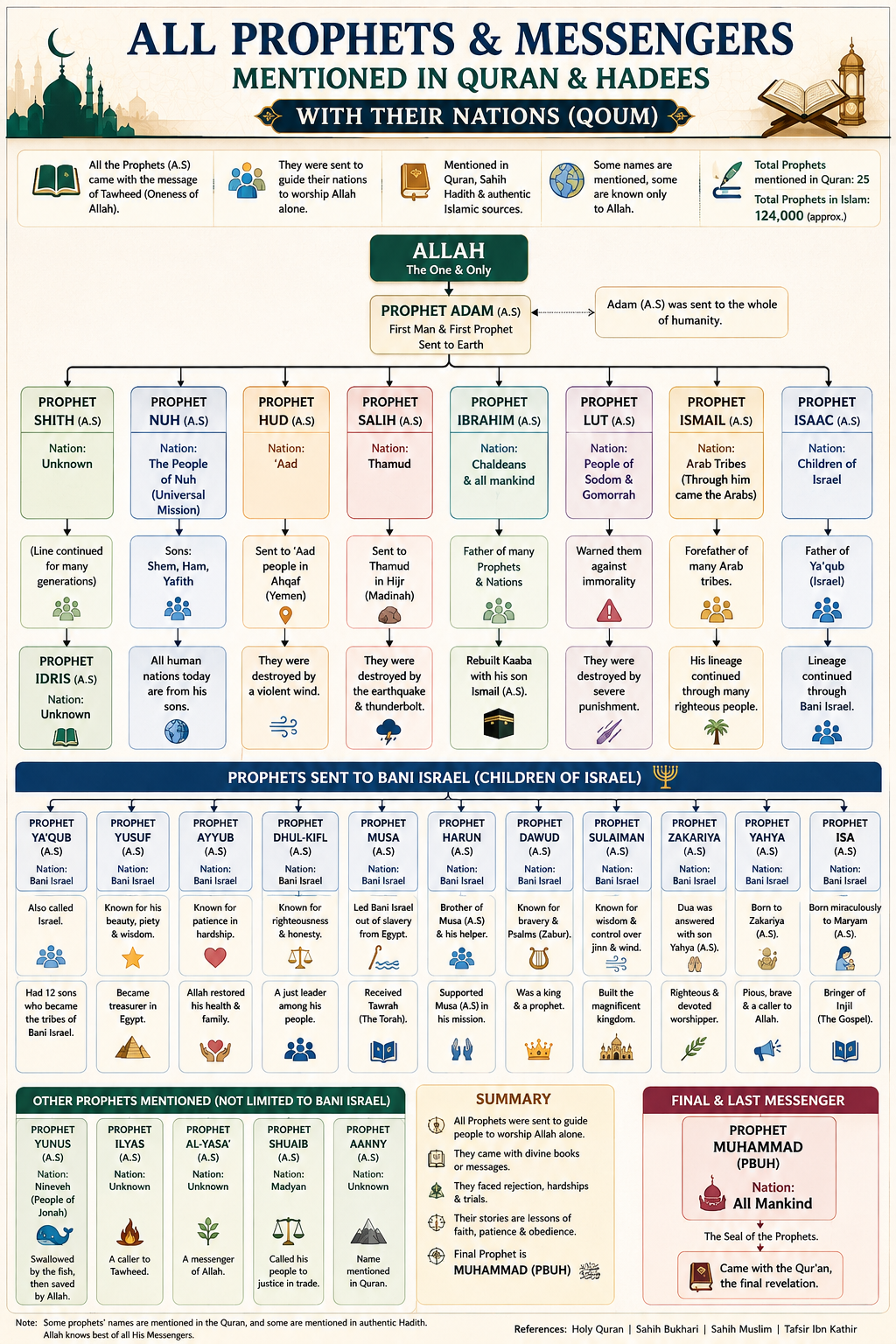
Allah says:
“We surely sent a messenger to every community, saying, “Worship Allah and shun false gods.” But some of them were guided by Allah, while others were destined to stray. So travel throughout the land and see the fate of the deniers!”
Allah also tells Prophet Muhammad ﷺ:
“There are messengers whose stories We have told you already and others We have not. And to Moses Allah spoke directly.”
This comprehensive guide to All Nations Mentioned in the Islam brings these groups together in organized tables, with their Arabic names, prophets, major events, beliefs, trials, outcomes, Qur’an references, Hadith references, and evidence levels
| # | Qaum / People / Community | Arabic | Prophet / Messenger associated | Main location / region | What they were known for | Main message / test | Outcome mentioned in Islamic sources | Primary source |
|---|---|---|---|---|---|---|---|---|
| 1 | People of Adam | ذرية آدم / بني آدم | Adam ﷺ | Early humanity | First human generation | Worship Allah and obey Him | Humanity continued after Adam | Qur’an 2:30–38; 7:11–27 |
| 2 | Children of Israel | بني إسرائيل | Many prophets, including Ya‘qub, Yusuf, Musa, Dawud, Sulayman, ‘Isa ﷺ | Palestine, Egypt and surrounding lands | Large prophetic community | Tawhid, covenant, obedience to revelation | Included righteous believers and rebellious groups | Qur’an 2, 5, 7, 17, 20, etc. |
| 3 | People of Nuh | قوم نوح | Nuh ﷺ | Ancient region; exact location not specified by Qur’an | Long-standing idolatry | Return to worshipping Allah alone | Flood; believers saved with Nuh | Qur’an 7:59–64; 11:25–49; 71 |
| 4 | ‘Ad | عاد | Hud ﷺ | Al-Ahqaf / southern Arabia traditionally associated | Great strength and impressive civilization | Abandon shirk and obey Allah | Destroyed by violent wind | Qur’an 7:65–72; 11:50–60; 46:21–26; 69:6–8 |
| 5 | Thamud | ثمود | Salih ﷺ | Al-Hijr / northern Arabia | Skilled stone-carving and settlements | Worship Allah; do not harm the she-camel | Destroyed by the earthquake/blast | Qur’an 7:73–79; 11:61–68; 15:80–84 |
| 6 | People of Ibrahim | قوم إبراهيم | Ibrahim ﷺ | Mesopotamia / surrounding region | Idolatry | Reject idols and worship Allah | Ibrahim was opposed; his people failed to defeat him | Qur’an 21:51–70; 29:16–27 |
| 7 | People of Lut | قوم لوط | Lut ﷺ | Cities of the region traditionally associated with the Dead Sea | Sexual immorality and other transgressions | Repent and obey Allah | Cities destroyed | Qur’an 7:80–84; 11:77–83; 15:57–77 |
| 8 | People of Shu‘ayb / Madyan | مدين | Shu‘ayb ﷺ | Madyan | Fraud in weights and measures | Justice, honest trade and Tawhid | Destroyed after rejection | Qur’an 7:85–93; 11:84–95 |
| 9 | Companions of the Thicket | أصحاب الأيكة | Shu‘ayb ﷺ according to the mainstream interpretation | Region associated with Madyan | Cheating in trade and rejection | Worship Allah and establish justice | Punished by the Day of the Shadow | Qur’an 26:176–191; 15:78–79 |
| 10 | People of Pharaoh | قوم فرعون / آل فرعون | Musa ﷺ | Egypt | Tyranny and oppression | Pharaoh was called to worship Allah and release Bani Israel | Pharaoh and his forces drowned | Qur’an 7:103–137; 10:75–92; 20:43–79 |
| 11 | Magicians of Pharaoh | سحرة فرعون | Musa ﷺ opposed them | Egypt | Practiced magic for Pharaoh | Witnessed Musa’s miracle | Accepted faith and were threatened by Pharaoh | Qur’an 7:109–126; 20:56–73 |
| 12 | Bani Israel under Musa | بني إسرائيل | Musa ﷺ | Egypt → Sinai | Enslaved by Pharaoh | Follow Allah and follow Musa | Saved from Pharaoh but repeatedly tested | Qur’an 2:47–61; 20:80–98 |
| 13 | People of the Sabbath | أصحاب السبت | Prophets among Bani Israel | A settlement by the sea | Violated Sabbath restrictions | Obey Allah’s command | Wrongdoers were punished/transformed | Qur’an 7:163–166; 2:65 |
| 14 | Qawm who demanded to see Allah | — | Musa ﷺ | Sinai | Excessive demands | Believe without demanding impossible signs | Thunderbolt struck them; they were later revived | Qur’an 2:55–56; 4:153 |
| 15 | People who worshipped the Calf | عبدة العجل | Musa ﷺ / Harun ﷺ | Sinai | Calf worship | Return to Tawhid | Severe repentance and punishment followed | Qur’an 2:51–54; 20:83–97 |
| 16 | People of the Two Gardens | أصحاب الجنتين | No prophet specified | Unspecified | Wealth and arrogance | Gratitude and recognition of Allah’s blessing | Wealth destroyed | Qur’an 18:32–44 |
| 17 | People of the Cave | أصحاب الكهف | No prophet named | Unspecified | Young believers fleeing persecution | Preserve faith in Allah | Slept miraculously for centuries | Qur’an 18:9–26 |
| 18 | Companions of the Raqim | أصحاب الرقيم | No prophet named | Unspecified | Associated with the Cave story | Faith and perseverance | Mentioned with People of the Cave | Qur’an 18:9 |
| 19 | People of the Town | أصحاب القرية | Messengers sent to them; names not given | Unspecified | Rejection of messengers | Believe in Allah’s messengers | Town destroyed after rejection | Qur’an 36:13–29 |
| 20 | People of Saba | سبأ | Prophetic messenger not named | Yemen | Great kingdom, gardens and prosperity | Gratitude to Allah | Flood of ‘Arim; kingdom scattered | Qur’an 34:15–19 |
| 21 | People of the Elephant | أصحاب الفيل | No prophet directly named in event | Arabia / Makkah | Abraha’s army attempted to attack Ka‘bah | Allah protected the Sacred House | Army destroyed by birds carrying stones | Qur’an 105 |
| 22 | People of Tubba‘ | قوم تُبَّع | Tubba‘ mentioned; prophet not identified | Yemen | Ancient kingdom | Qur’an mentions their destruction | Punished like earlier rejecting peoples | Qur’an 44:37; 50:14 |
| 23 | People of Ar-Rass | أصحاب الرس | Prophet not named | Unknown | Rejected their messenger | Rejection of revelation | Destroyed | Qur’an 25:38; 50:12 |
| 24 | People of the Ditch | أصحاب الأخدود | Believers mentioned; king and boy in Hadith | Ancient kingdom | Persecuted believers | Faith under persecution | Believers remained steadfast | Qur’an 85:4–10; Sahih Muslim |
| 25 | People of the Sabbath settlement | أصحاب السبت | Prophets among Bani Israel | Coastal settlement | Sabbath violation | Obedience | Wrongdoers punished | Qur’an 7:163–166 |
| 26 | Qarun’s people / Bani Israel | قارون | Musa ﷺ’s era | Egypt | Extreme wealth and arrogance | Wealth should be used responsibly | Qarun and his wealth swallowed by earth | Qur’an 28:76–82 |
| 27 | People who rejected the she-camel | قوم صالح | Salih ﷺ | Thamud | Killed the miraculous she-camel | Respect Allah’s sign | Destroyed | Qur’an 91:11–15 |
| 28 | People of the Dwellings of Hijr | أصحاب الحجر | Salih ﷺ | Al-Hijr | Carved homes in mountains | Rejected warning | Destroyed | Qur’an 15:80–84 |
| 29 | People of Madyan | أهل مدين | Shu‘ayb ﷺ | Madyan | Commercial dishonesty | Fairness in trade | Destroyed | Qur’an 11:84–95 |
| 30 | People of Pharaoh | آل فرعون | Musa ﷺ | Egypt | Oppression of Bani Israel | Submit to Allah | Drowned | Qur’an 28:3–6 |
| 31 | Children of Adam generally | بني آدم | Adam ﷺ and subsequent prophets | Worldwide | Humanity | Worship Allah and avoid Shaytan | People divided between belief and disbelief | Qur’an 7:26–27, 31, 35 |
| 32 | The Ummah of Muhammad ﷺ | أمة محمد ﷺ | Muhammad ﷺ | Worldwide | Final prophetic community | Qur’an and Sunnah; Tawhid | Final ummah; accountable for its deeds | Qur’an 3:110; 2:143 |
| 33 | The Muhajirun | المهاجرون | Muhammad ﷺ | Makkah → Madinah | Migrated for Islam | Sacrifice for faith | Praised by Allah | Qur’an 9:100; 59:8 |
| 34 | The Ansar | الأنصار | Muhammad ﷺ | Madinah | Supported Muhajirun and Islam | Faith and brotherhood | Praised by Allah | Qur’an 9:100; 59:9 |
| 35 | People of the Bay‘ah under the Tree | أهل بيعة الرضوان | Muhammad ﷺ | Hudaybiyyah | Pledged loyalty | Obedience and sacrifice | Allah declared His pleasure with them | Qur’an 48:18 |
| 36 | Ahl al-Bayt | أهل البيت | Household of Muhammad ﷺ | Makkah/Madinah | Prophet’s household | Faith and righteousness | Given special status in Islamic sources | Qur’an 33:33; Hadith |
| 37 | Ahl al-Kitab | أهل الكتاب | Previous prophets | Various regions | Jews and Christians possessing scripture | Follow revelation and worship Allah | Qur’an discusses believers and rejecters among them | Qur’an 3:64–71; 5:5 |
| 38 | The Jews | اليهود | Musa ﷺ and many prophets | Various lands | Bani Israel tradition | Follow Torah and prophets | Qur’an distinguishes among them | Qur’an 2, 5, 17 |
| 39 | The Christians | النصارى | ‘Isa ﷺ | Palestine and beyond | Followers associated with ‘Isa | Follow ‘Isa and worship Allah | Qur’an distinguishes different groups among them | Qur’an 3:52–55; 5:72–82 |
| 40 | The People of the Gospel | أهل الإنجيل | ‘Isa ﷺ | Palestine | Possessed Injil | Judge by Allah’s revelation | Addressed directly in Qur’an | Qur’an 5:47 |
| 41 | The Sabians | الصابئون | Exact identity debated | Ancient Near East | Religious community mentioned by Qur’an | Faith in Allah and Last Day | Mentioned among religious communities | Qur’an 2:62; 5:69; 22:17 |
| 42 | The Magians | المجوس | Prophet not identified | Persia | Zoroastrian religious tradition | Mentioned among religious groups | Mentioned once explicitly | Qur’an 22:17 |
| 43 | The Hypocrites | المنافقون | Muhammad ﷺ | Madinah | Outward Islam, inward disbelief | Sincerity and faith | Severely condemned | Qur’an 63; 4:142–145 |
| 44 | The Believers | المؤمنون | All prophets | Worldwide | Faith in Allah | Tawhid and righteous deeds | Reward in Paradise | Qur’an 23:1–11 |
| 45 | The Disbelievers | الكافرون | All prophets warned them | Worldwide | Rejection of truth | Accept revelation | Punishment if they persist in disbelief | Qur’an 109; many passages |
| 46 | The Polytheists | المشركون | Various prophets | Various regions | Shirk | Worship Allah alone | Prophets warned them | Qur’an 6:74; 7:59 |
| 47 | The People of Quraysh | قريش | Muhammad ﷺ | Makkah | Controlled Makkah’s trade and Ka‘bah | Accept Muhammad’s message | Many opposed; some eventually accepted Islam | Qur’an 106; 17:90–93 |
| 48 | People of Makkah | أهل مكة | Muhammad ﷺ | Makkah | Opposed/rejected early Islamic message | Tawhid | Makkah eventually became Muslim | Qur’an 6:92; 48 |
| 49 | People of Madinah | أهل المدينة | Muhammad ﷺ | Madinah | Supported the Prophet and Islam | Faith and community | Became center of Muslim state | Qur’an 9:101, 120 |
| 50 | The Bedouins | الأعراب | Muhammad ﷺ | Arabian desert | Nomadic communities | Faith and obedience varied | Qur’an distinguishes sincere believers from hypocrites | Qur’an 9:97–99, 101, 120 |
| 51 | The People of the North/West and other nations addressed by Muhammad ﷺ | — | Muhammad ﷺ | Worldwide | Diverse peoples | Final message of Islam | Message intended for humanity | Qur’an 34:28; 7:158 |
The Qur’an associates them with the story of Thamud, and Sahih al-Bukhari explicitly refers to the land of Al-Hijr as the land of Thamud.
The flowchart given below is easy to understand all nations mentioned in Islam.
NATIONS, PEOPLES & COMMUNITIES IN ISLAM
│
├── 1. HUMANITY
│ ├── Adam (AS)
│ ├── Children of Adam
│ └── Early Generations
│
├── 2. ANCIENT NATIONS
│ ├── People of Nuh
│ ├── ‘Ad
│ ├── Thamud
│ ├── People of Al-Hijr
│ ├── People of Lut
│ ├── Madyan
│ ├── Ashab al-Aykah
│ ├── Ashab al-Rass
│ ├── People of Tubba’
│ ├── People of Saba
│ └── People of Pharaoh
│
├── 3. BANI ISRAEL & RELATED COMMUNITIES
│ ├── Bani Israel
│ ├── Twelve Tribes
│ ├── People of Musa
│ ├── People of Dawud
│ ├── People of Sulayman
│ ├── People of Isa
│ └── Other communities of Bani Israel
│
├── 4. SPECIAL HISTORICAL GROUPS
│ ├── Companions of the Cave
│ ├── Companions of the Elephant
│ ├── Companions of the Trench
│ ├── People of the Town
│ ├── Pharaoh’s Magicians
│ └── Gog and Magog
│
├── 5. ARAB PEOPLES
│ ├── Quraysh
│ ├── Bedouins / Al-A’rab
│ ├── People of Makkah
│ ├── People of Madinah
│ └── Other Arab tribes mentioned in the Sunnah
│
├── 6. RELIGIOUS COMMUNITIES
│ ├── Believers
│ ├── People of the Book
│ ├── Jews
│ ├── Christians
│ ├── Sabians
│ ├── Magians
│ ├── Polytheists
│ └── Hypocrites
│
├── 7. EARLY MUSLIM COMMUNITIES
│ ├── Muhajirun
│ ├── Ansar
│ ├── People of Madinah
│ └── Ummah of Muhammad ﷺ
│
├── 8. NON-HUMAN COMMUNITIES
│ ├── Jinn
│ ├── Believing Jinn
│ ├── Disbelieving Jinn
│ └── Iblis and his followers
│
└── 9. HEREAFTER GROUPS
├── Foremost
├── People of the Right
├── People of the Left
├── People of Paradise
├── People of Hell
└── People of Al-A’raf
Important nations are discussed below.
1. Adam (AS) and the First Generations

The story of Adam (AS) marks the beginning of human history and provides the foundation for understanding all nations mentioned in Islam. From Adam (AS) came successive generations of humanity, which later spread across the earth. The Qur’an does not give the names of every early generation or nation, but it teaches that Allah sent guidance to humanity.
These early generations eventually developed into different peoples and communities, forming the historical background of the nations mentioned in Islam, including the later peoples to whom prophets and messengers were sent. The story of Adam (AS) therefore begins the wider history of humanity, faith, guidance, and the rise of different nations.
- Adam (AS) was the first human being and the first prophet according to Islamic belief.
- The Quran begins the story of humanity with Adam.
- Allah created Adam from clay. Allah taught him knowledge. The angels were commanded to prostrate before him.
- Iblis refused.
- His refusal came from arrogance.
- Iblis believed himself better than Adam.
- Allah rejected Iblis. He was given respite until an appointed time.
- Adam and his wife lived in Paradise. Satan then whispered to them.
- They approached the forbidden tree.
- They realized their mistake and turned to Allah in repentance.
- Allah accepted their repentance.
- Human life on Earth then began.
Important Quran references
- Al-Baqarah 2:30–39
- Al-A’raf 7:11–27
- Al-Hijr 15:26–44
- Ta-Ha 20:115–123
- Sad 38:71–85
The Quran does not provide a complete list of every generation between Adam and Nuh (AS). Therefore, detailed genealogies found in later books should not automatically be treated as Quranic facts.
2. The People of Nuh (AS)

The story of the People of Nuh (AS) is a major chapter in the history of all nations mentioned in Islam, teaching the importance of Tawhid, obedience, repentance, and listening to Allah’s messengers.
- Nuh (AS) was sent to a people who had fallen into shirk.
- The Quran describes his long struggle with them.
- Nuh called them to worship Allah alone.
- He preached openly.
- He also preached privately.
- He warned them day and night.
- But many people rejected him.
- They mocked him.
- They followed their leaders.
- They refused to abandon their idols.
- The Quran names five idols:
- Wadd
- Suwa’
- Yaghuth
- Ya’uq
- Nasr
- These names are mentioned in Surah Nuh 71:23.
- Nuh continued calling his people to Allah.
- The Quran states that he remained among them for 950 years.
- Eventually, Allah commanded Nuh to build the Ark.
- His people mocked him while he built it.
- Then Allah’s command came.
- Water came from the sky.
- Water also burst from the earth.
- Nuh entered the Ark with the believers and the creatures Allah commanded him to carry.
- The disbelievers were drowned.
- Even Nuh’s own son refused to follow him.
- The story teaches that family ties do not replace faith.
Main Quran references
- Hud 11:25–49
- Al-Mu’minun 23:23–30
- Ash-Shu’ara 26:105–122
- Al-Qamar 54:9–17
- Nuh 71:1–28
- Al-‘Ankabut 29:14–15
Main lessons
- The story of Nuh teaches patience.
- It also teaches that a prophet’s duty is to deliver the message.
- Guidance belongs to Allah.
3. The People of ‘Ad

The Qur’an presents the destruction of ʿAd as a warning to later generations: worldly strength and power cannot save a nation that turns away from Allah.
Their story is therefore an important chapter when studying the all nations mentioned in Islam, especially the nations that received prophets and faced the consequences of rejecting divine guidance.
- The people of ‘Ad came after the people of Nuh.
- Allah sent Hud (AS) to them.
- They were powerful.
- They were confident in their strength.
- They built impressive structures.
- Their strength became a source of arrogance.
- They believed that no one could overpower them.
- Hud called them to worship Allah.
- They rejected him.
- They also challenged his warning.
- Allah eventually sent a powerful wind against them.
- The Quran describes it as a destructive wind.
- It continued for seven nights and eight days.
- The people of ‘Ad were destroyed.
- Hud and the believers were saved by Allah.
Quran references
- Al-A’raf 7:65–72
- Hud 11:50–60
- Ash-Shu’ara 26:123–140
- Fussilat 41:15–16
- Al-Ahqaf 46:21–26
- Adh-Dhariyat 51:41–42
- Al-Haqqah 69:6–8
- Al-Fajr 89:6–8
Main lesson
- Power does not protect a nation from Allah’s judgment.
- Arrogance can destroy a civilization.
4. The People of Thamud

The story of Thamud teaches that wealth, strength, and impressive homes cannot protect a nation from Allah’s punishment when it knowingly rejects His guidance.
Their history is therefore an important chapter when studying all nations mentioned in Islam and the lessons Allah gives through the stories of earlier peoples.
- Thamud came after ‘Ad.
- Allah sent Salih (AS) to them.
- They were known for carving homes into mountains.
- They had great skill and strength.
- Salih called them to worship Allah alone.
- They demanded a sign.
- Allah gave them a clear sign.
- It was the she-camel.
- Salih warned them not to harm her.
- They were also given instructions concerning her access to water.
- But a group of them became determined to kill her.
- They killed the she-camel.
- Salih warned them that punishment would come.
- They were given a short period of time.
- Then Allah’s punishment came.
- The Quran mentions a mighty blast and an earthquake.
- Thamud were destroyed.
Quran references
- Al-A’raf 7:73–79
- Hud 11:61–68
- Ash-Shu’ara 26:141–159
- An-Naml 27:45–53
- Al-Qamar 54:23–31
- Ash-Shams 91:11–15
Authentic Hadith
- The Prophet Muhammad ﷺ passed by the dwellings of Thamud during a journey.
- He warned his companions about entering those places.
- The incident is reported in Sahih al-Bukhari and Sahih Muslim.
- The lesson is important.
- The ruins of a destroyed people should not become mere entertainment.
- They should remind a person of Allah’s power and judgment.
5. Ibrahim (AS) and His People
His story is therefore essential when studying all nations mentioned in Islam, because his mission and legacy influenced generations of prophets and communities.
- Ibrahim (AS) was one of the greatest prophets.
- He strongly opposed shirk.
- His people worshipped idols.
- The Quran records Ibrahim questioning their beliefs.
- He challenged their worship of things that could not benefit or harm them.
- He also destroyed their idols.
- His people became furious.
- They decided to punish him by throwing him into a fire.
- But Allah protected Ibrahim.
- Allah commanded the fire to become cool and safe for him.
Quran references
- Al-An’am 6:74–83
- Maryam 19:41–50
- Al-Anbiya 21:51–70
- Ash-Shu’ara 26:69–89
- As-Saffat 37:83–113
Important note about Nimrod
- Many Islamic historical and tafsir sources identify the king who argued with Ibrahim as Nimrod.
- However, the Quran does not give the king’s name in that passage.
6. The People of Lut (AS)
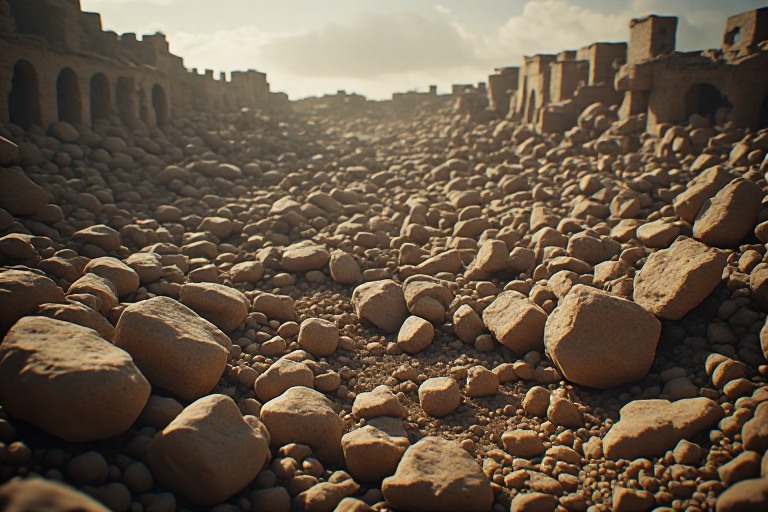
The story of the People of Lut (AS) teaches the importance of faith, obedience, moral responsibility, and accepting the guidance brought by Allah’s messengers.
Their account is an important chapter when studying all nations mentioned in Islam and the lessons given through the histories of earlier communities.
- Lut (AS) was sent to a corrupt people.
- The Quran describes their immoral behavior (sexual wrongdoing, approaching men with desire, cutting off roads, evil gatherings).
- They openly committed grave sins.
- They also rejected Lut’s warning.
- Angels later came to Lut.
- They were sent with an important mission.
- Lut was instructed to leave with the believers.
- His wife did not escape the punishment.
- The people were destroyed.
- The Quran describes their cities being overturned.
- It also mentions stones of baked clay.
Quran references
- Al-A’raf 7:80–84
- Hud 11:77–83
- Al-Hijr 15:57–77
- Al-Anbiya 21:74–75
- Ash-Shu’ara 26:160–175
- An-Naml 27:54–58
- Al-‘Ankabut 29:28–35
- Al-Qamar 54:33–39
7. Madyan and Shu’ayb (AS)
The story of Madyan teaches important lessons about Tawhid, honesty, fair trade, justice, repentance, and obedience to Allah. It is therefore an important chapter when studying all nations mentioned in Islam and the consequences faced by communities that rejected their prophet.
- Shu’ayb (AS) was sent to Madyan.
- His people had serious problems in trade.
- They reduced measurements.
- They reduced weights.
- They cheated people.
- They also caused corruption in the land.
- Shu’ayb called them to worship Allah.
- He also commanded them to deal honestly.
- They rejected him.
- They even threatened him and the believers.
- Allah’s punishment eventually came.
- The Quran mentions an earthquake and a mighty blast in connection with their destruction.
Quran references
- Al-A’raf 7:85–93
- Hud 11:84–95
- Al-‘Ankabut 29:36–37
Main lesson
- Islam does not separate worship from honesty.
- A person cannot claim righteousness while deliberately cheating others.
8. The People of the Thicket — Ashab al-Aykah
- The Quran also mentions Ashab al-Aykah, meaning the people of the thicket.
- They rejected the message associated with Shu’ayb (AS).
- Their story is connected with false dealing and rejection of divine guidance.
- The Quran mentions their punishment was the Day of Shade.
Quran references
- Al-Hijr 15:78–79
- Ash-Shu’ara 26:176–191
- Sad 38:12
- Qaf 50:14
Important scholarly note
- Classical scholars discussed the relationship between the people of Madyan and Ashab al-Aykah.
- Some regarded them as the same people.
- Others treated them as distinct but closely related communities.
- Therefore, this point should be presented as a scholarly discussion rather than absolute certainty.
9. Pharaoh and His People
The story of Pharaoh teaches powerful lessons about Tawhid, arrogance, oppression, repentance, patience, and the consequences of rejecting Allah’s guidance. It is therefore essential when studying all nations mentioned in Islam and the warnings given through earlier communities.
- The story of Musa (AS) and Pharaoh is one of the longest prophetic stories in the Quran.
- Pharaoh ruled Egypt.
- He oppressed Bani Israel.
- He divided them into groups.
- He killed their sons.
- He spared their women.
- Musa (AS) was born during this period.
- Allah protected him.
- Musa was eventually raised in Pharaoh’s household.
- Later, Allah chose Musa as a prophet.
- Harun (AS) was also appointed to help him.
- Allah sent Musa to Pharaoh.
- Musa showed signs from Allah.
- Among them were the staff and the shining hand.
- Pharaoh rejected the message.
- His magicians were gathered.
- They eventually recognized that Musa’s sign was not ordinary magic.
- They believed in the Lord of Musa and Harun.
- Pharaoh threatened them.
- Musa later led Bani Israel out of Egypt.
- Pharaoh and his army pursued them.
- The sea was divided by Allah’s command.
- Bani Israel crossed.
- Pharaoh followed.
- The sea returned.
- Pharaoh and his army drowned.
Quran references
- Al-Baqarah 2:49–50
- Al-A’raf 7:103–137
- Yunus 10:75–92
- Ta-Ha 20:24–79
- Ash-Shu’ara 26:10–68
- Al-Qasas 28:3–42
- Ghafir 40:23–46
- Az-Zukhruf 43:46–56
Main lesson
- Political power cannot save a person from Allah.
- Pharaoh had wealth, soldiers, and authority.
- None of it saved him.
10. Bani Israel
- Bani Israel are one of the most frequently discussed communities in the Quran.
- The name refers to the descendants of Ya’qub (AS), who was also known as Israel.
- Allah gave them many blessings.
- They received prophets.
- They received scripture.
- They experienced major miracles.
- Their history includes both righteous people and people who disobeyed.
- It is therefore incorrect to treat every Israelite as sinful.
Major events
Their history includes:
- The oppression of Pharaoh.
- The birth and mission of Musa.
- The Exodus from Egypt.
- The crossing of the sea.
- The revelation of the Torah.
- Manna and quails.
- Water provided in the wilderness.
- The worship of the calf by some of them.
- Their refusal to enter the Holy Land at one point.
- The rise of righteous kings and prophets.
- Dawud (AS).
- Sulayman (AS).
- Zakariyya (AS).
- Yahya (AS).
- Isa (AS).
Quran references
- Al-Baqarah 2:40–61
- Al-Ma’idah 5:12–26
- Al-A’raf 7:138–171
- Yunus 10:90–93
- Ta-Ha 20:80–98
- Al-Isra 17:2–8
- Al-Qasas 28:3–42
An important Quranic principle
- The Quran recognizes righteous people among the People of the Book.
- For example:
- Al-A’raf 7:159 mentions a group among the people of Musa who guided with truth and established justice.
- Therefore, historical criticism in the Quran is not a blanket condemnation of every individual.
11. The People of Yunus (AS)

- Yunus (AS) was sent to his people.
- At first, they rejected the warning.
- Yunus eventually left them.
- His story then includes the famous incident of the great fish.
- Yunus called upon Allah.
- Allah saved him.
- But the most remarkable part of his nation’s story came afterward.
- His people believed.
- They repented.
- Allah removed the punishment from them.
Quran reference
- Yunus 10:98
- This makes the people of Yunus a remarkable example.
- They believed before the punishment became unavoidable.
- Allah therefore spared them.
12. Saba’
- Saba’ was a prosperous people.
- The Quran describes their gardens.
- They had an organized and productive land.
- Allah gave them abundant blessings.
- They were told to eat from their Lord’s provision.
- But they became ungrateful.
- Their situation changed.
- The Quran mentions the Flood of Al-‘Arim.
- Their gardens were replaced by inferior vegetation.
- Their settlements became scattered.
Quran reference
- Saba’ 34:15–19
Important note
- The Quran does not identify the prophet who warned Saba’.
- Later historical literature contains additional information.
- Such information should be labeled separately.
13. Ashab al-Rass — People of the Well
- The Quran mentions Ashab al-Rass.
- However, it gives very little information about them.
- They are mentioned among earlier peoples who rejected their messengers.
References
- Al-Furqan 25:38
- Qaf 50:12
What we can safely say
- They were an earlier community.
- They rejected their messenger.
- They were among the peoples mentioned as examples of destruction.
- The exact location and identity of their “Rass” are not established by the Quran.
14. Ashab al-Hijr — People of Al-Hijr
- The Quran mentions the people of Al-Hijr.
- They were associated with Thamud.
- They carved homes into mountains.
- They rejected Allah’s signs.
- Their destruction followed.
Quran reference
- Al-Hijr 15:80–84
- The Prophet Muhammad ﷺ also passed through the area associated with Thamud.
- Authentic narrations in Sahih al-Bukhari and Sahih Muslim describe his warning to the companions concerning the dwellings of those who were punished.
15. Ashab al-Qaryah — People of the Town
- Surah Ya-Sin gives the story of a town.
- Messengers were sent to its people.
- The people rejected them.
- Another messenger was sent.
- The people continued to reject the message.
- Then a believing man came from the far side of the city.
- He urged his people to follow the messengers.
- He defended the truth.
- The people rejected the message.
- The believing man was honored by Allah.
Quran reference
- Ya-Sin 36:13–29
What is unknown?
The Quran does not explicitly tell us:
- The name of the town.
- The names of the messengers.
- The name of the believing man.
- Its exact geographical location.
16. Ashab al-Ukhdud — People of the Ditch
- The Quran tells a powerful story in Surah Al-Buruj.
- Believers were persecuted because they believed in Allah.
- A tyrannical ruler opposed them.
- The believers refused to abandon their faith.
- They were thrown into trenches containing fire.
- Allah praised their faith.
- The Quran condemns the persecutors.
Quran references
- Al-Buruj 85:4–10
Authentic Hadith
Sahih Muslim contains a detailed story involving:
- A king.
- A magician.
- A monk.
- A young boy.
- The boy’s growing faith.
- The persecution of believers.
The story demonstrates the power of sincere faith.
It also shows how one person’s courage can influence an entire community.
17. Tubba’ and His People
- Tubba’ is mentioned in the Quran.
- Allah asks whether the people of Tubba’ were better than earlier destroyed peoples.
Quran references
- Ad-Dukhan 44:37
- Qaf 50:14
18. Ya’juj and Ma’juj — Gog and Magog
- Ya’juj and Ma’juj are different from many earlier nations.
- Their major appearance is connected with the future.
- The Quran mentions them in the story of Dhul-Qarnayn.
- They caused corruption in the land.
- A people asked Dhul-Qarnayn for help.
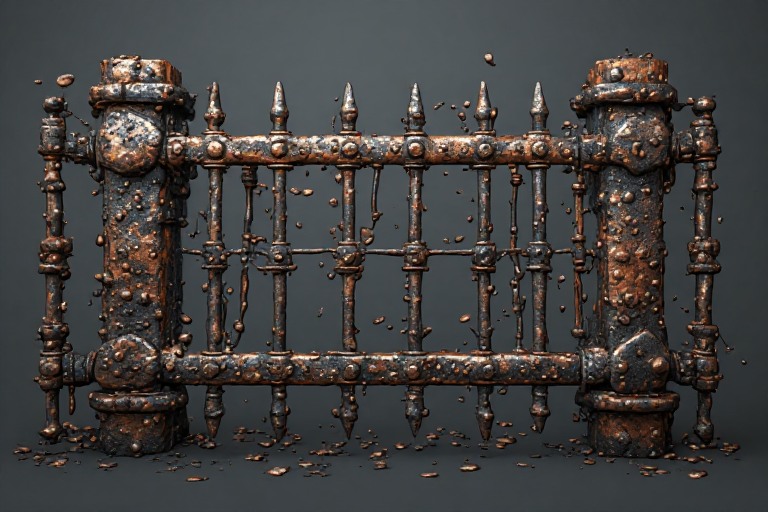
- He built a barrier between them.
- Iron was used.
- Molten copper was also used.
- Ya’juj and Ma’juj could not climb over it or break through it at that time.
- The barrier remains until Allah’s appointed time.
- Near the end of time, their emergence will become a major sign.
Quran references
- Al-Kahf 18:83–101
- Al-Anbiya 21:96–97
Authentic Hadith
- Their emergence is described in authentic narrations, including reports in Sahih Muslim.
- The Quran and Hadith should be used together when discussing their end-time story.
Conclusion
All nations mentioned in Islam form a vast subject. The Qur’an presents the stories of earlier peoples as lessons rather than merely ancient history.
The strongest examples include Nuh, ‘Ad, Thamud, Ibrahim’s people, Lut’s people, Madyan, the people associated with Aykah, Pharaoh’s people, Bani Israel, Saba, Tubba‘, Ar-Rass and Quraysh.
The Qur’an also mentions broader communities such as Jews, Christians, Sabians, Magians, People of the Book, believers, hypocrites, disbelievers and polytheists.
Authentic Hadith additionally preserve the names of numerous Arab tribes and other peoples, including Quraysh, Tamim, Ghifar, Aslam, Juhaynah, Muzaynah, Ashja‘, Daws, Tayy, Romans, Persians, Abyssinians and Turks. Sahih Muslim specifically records several of these tribes in its chapter on their virtues.
The most important lesson is that not every name found in later historical literature should be presented as Qur’anic fact.
Allah knows best.
The stories of nations mentioned in Islamic tradition contain powerful lessons about faith, history, civilization, and human behavior. To explore these subjects further, read about the ancient mystery of Iram and the fascinating account of Ya’juj and Ma’juj in Islam.
FAQs
What are the nations mentioned in Islam?
The Qur’an mentions nations such as Nuh, ʿAd, Thamud, Madyan, the People of Lut, Bani Israel, Saba, Quraysh, and Pharaoh’s people.
Who were the people of ʿAd and Thamud?
They were ancient nations to whom Hud (AS) and Salih (AS) were sent.
Who were Bani Israel?
Bani Israel were the descendants of Yaʿqub (AS), also known as Israel.
Which nation believed and was spared?
The People of Yunus (AS) believed, and Allah removed the punishment from them.
Does the Qur’an mention every nation?
No. The Qur’an states that some messengers were mentioned while others were not.
Why are ancient nations mentioned in the Qur’an?
Their stories teach lessons about faith, Tawhid, patience, gratitude, justice, and repentance.