
NASA’s Roman Space Telescope is now on its journey into space. SpaceX’s powerful Falcon Heavy rocket launched the telescope on August 30, 2026. Roman will explore dark energy, dark matter, exoplanets, galaxies, and distant cosmic mysteries.
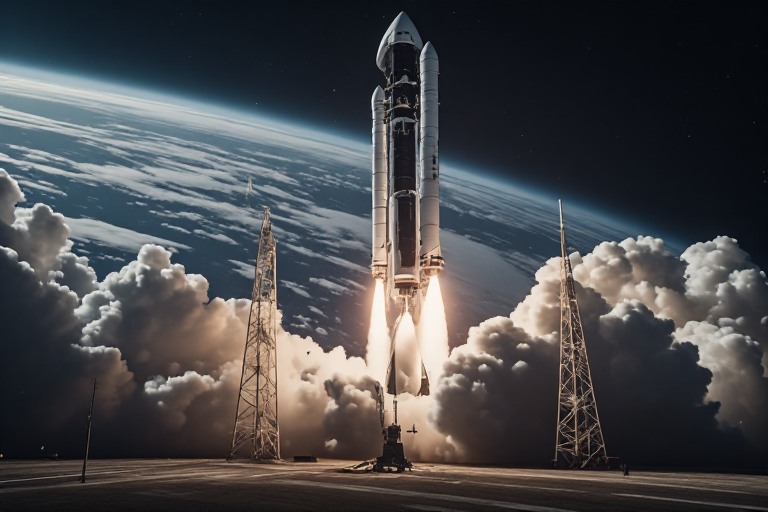
SpaceX’s Falcon Heavy has once again made headlines after launching NASA’s Nancy Grace Roman Space Telescope into space on August 30, 2026. The powerful heavy-lift rocket launched from Launch Complex 39A at NASA’s Kennedy Space Center in Florida, beginning Roman’s journey toward its eventual observing location near the Sun-Earth L2 point, roughly 1 million miles (1.5 million kilometers) from Earth.
But what makes Falcon Heavy so powerful? Built around three Falcon 9-derived first-stage cores, the rocket uses 27 Merlin 1D engines to generate approximately 5.13 million pounds of thrust at liftoff. The rocket stands about 70 meters (229.6 feet) tall and is approximately 12.2 meters (39.9 feet) wide, making it one of the most powerful operational launch vehicles in the world.
Falcon Heavy is also notable for its partially reusable design. Its two side boosters can return to Earth after separation and be refurbished for future missions, an approach that helps demonstrate SpaceX’s focus on reusable launch technology. For the Roman mission, NASA reported that the side boosters safely returned to the launch site for refurbishment.
The rocket’s job, however, was only the beginning. After Falcon Heavy delivered the Nancy Grace Roman Space Telescope onto its required trajectory, Roman separated from the launch vehicle approximately 31 minutes after liftoff and began its independent journey. The space telescope is designed to conduct enormous infrared surveys of the universe, investigating some of astronomy’s biggest questions involving dark energy, dark matter, exoplanets, galaxies and black holes.
In this complete guide, we break down SpaceX Falcon Heavy, including its engines, fuel, stages, thrust, dimensions, payload capacity, reusable boosters, launch sequence and Roman Space Telescope mission. We’ll also explain why this particular launch matters and how Falcon Heavy compares with other powerful rockets used for modern space exploration.
From the 27 Merlin engines roaring at liftoff to Roman’s journey toward L2, here is everything you need to know about the Falcon Heavy rocket and the historic NASA Roman Space Telescope launch.
SpaceX Falcon Heavy: The Rocket Behind NASA’s Roman Space Telescope Mission
The powerful SpaceX rocket that launched NASA’s Nancy Grace Roman Space Telescope on August 30, 2026. Here is the complete quick guide to the rocket, from its engines and propellant to its stages, reusable boosters and Roman mission.
What Is Falcon Heavy?
Falcon Heavy is a heavy-lift launch vehicle developed and operated by SpaceX. Its first stage is made from three Falcon 9-derived cores: one center core and two side boosters.
Three First-Stage Cores
Falcon Heavy combines three Falcon 9 first-stage cores. Two are side boosters and one is the center core. Together they form the rocket’s first stage.
27 Merlin Engines
The three first-stage cores contain nine Merlin 1D engines each. SpaceX lists each sea-level Merlin engine at approximately 845 kN (190,000 lbf) of thrust.
What Fuel Does It Use?
Falcon Heavy’s Merlin engines use liquid oxygen (LOX) and rocket-grade kerosene known as RP-1. These propellants power the rocket’s first-stage Merlin engines and the second-stage Merlin Vacuum engine.
Second Stage
After the first-stage cores separate, Falcon Heavy’s second stage continues carrying the payload. It uses one Merlin Vacuum engine designed for operation in the vacuum of space.
How Big Is Falcon Heavy?
SpaceX lists Falcon Heavy at approximately 70 meters (229.6 feet) tall and 12.2 meters (39.9 feet) wide.
How Powerful Is It?
Falcon Heavy produces more than 5 million pounds of thrust at liftoff. SpaceX compares its liftoff thrust to the combined thrust of approximately 18 Boeing 747 aircraft.
Reusable Boosters
Falcon Heavy’s two side boosters are designed for recovery and reuse. After separating from the center core, they can perform controlled return maneuvers and land for potential refurbishment and future flights.
Payload Fairing
The payload fairing protects the spacecraft or satellite during the atmospheric portion of launch. Falcon Heavy uses a carbon-composite fairing derived from Falcon’s flight-proven architecture.
Payload Capability
SpaceX lists Falcon Heavy’s maximum payload capability to low Earth orbit at approximately 63,800 kilograms (140,660 pounds).
Engine-Out Capability
Falcon Heavy has propulsion redundancy because it uses 27 first-stage engines. SpaceX says the launch vehicle monitors individual engines and can shut down an off-nominal engine when mission success remains possible with the remaining engines.
First Flight
Falcon Heavy made its first orbital launch on February 6, 2018. SpaceX reported that two of its three boosters successfully landed during that demonstration mission.
🚀 Falcon Heavy + NASA Roman
On August 30, 2026, Falcon Heavy launched NASA’s Nancy Grace Roman Space Telescope from Launch Complex 39A at Kennedy Space Center, Florida. NASA reported that the rocket performed as expected and separated from Roman approximately 31 minutes into the flight.
🌌 Roman’s Journey Continues
Falcon Heavy’s job was to place Roman on its required trajectory. Roman is now traveling independently toward the Sun-Earth L2 region, approximately one million miles from Earth. NASA expects the journey and subsequent commissioning process to take several months.
NASA’s Roman Space Telescope
NASA’s Nancy Grace Roman Space Telescope has launched. The infrared observatory is heading toward L2, where it will survey enormous regions of the universe and investigate dark energy, dark matter, exoplanets, galaxies and black holes.
🚀 Roman Has Begun Its Journey
NASA successfully launched the Nancy Grace Roman Space Telescope aboard a SpaceX Falcon Heavy from Kennedy Space Center in Florida. After separating from the rocket, Roman began its journey toward the Sun-Earth L2 region, approximately one million miles (1.5 million km) from Earth.
Dark Energy: What Is Driving Cosmic Expansion?
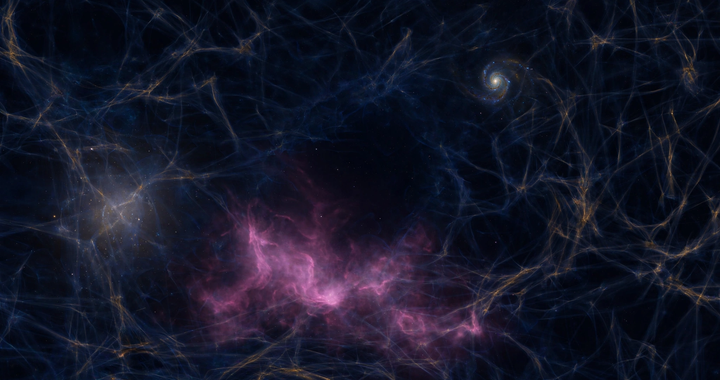
The expansion of the universe is accelerating. Scientists call the unknown cause of this acceleration “dark energy,” but its true nature remains unknown. Roman will survey enormous populations of galaxies and other cosmic objects to study how the universe has expanded throughout cosmic history.
Dark Matter: What Is the Invisible Universe Made Of?
Dark matter does not normally interact with light in a way that allows us to see it directly. Scientists infer its presence through its gravitational effects. Roman will help map the distribution of matter across huge regions of the universe, including through gravitational-lensing measurements.
Hidden Planets: How Many Worlds Are in Our Galaxy?
Roman will use gravitational microlensing to search for planets beyond our solar system. This technique can detect planetary systems that are difficult to find using other methods and can provide a broader statistical picture of the Milky Way’s planets.
Potentially Habitable Worlds: Which Planets Deserve a Closer Look?
Roman is not a direct alien-life detector. However, its exoplanet observations could identify planetary systems that future observatories may study in greater detail. Roman’s Coronagraph Instrument will also demonstrate technology for directly imaging planets around other stars.
Supermassive Black Holes: How Did They Become So Huge?
Many galaxies contain supermassive black holes at their centers. Scientists still study how these enormous objects formed and grew. Roman’s wide-field surveys can search for distant black holes and transient events associated with them.
Milky Way Center: What Is Hidden in the Galactic Bulge?
The center of the Milky Way is crowded with stars and contains the supermassive black hole Sagittarius A*. Roman’s infrared observations will allow scientists to survey large numbers of stars and planetary systems toward this difficult-to-study region.
The Unexpected: What Will Roman Find That Nobody Predicted?
Roman is designed to survey enormous areas of the sky. That means its discoveries will not necessarily be limited to today’s scientific questions. Large surveys can reveal unusual stars, rare transient events, strange planetary systems and other phenomena that scientists may not have predicted before the observations began.
High-Resolution View
Hubble has spent decades observing the universe across visible, ultraviolet and infrared wavelengths. Its high-resolution observations have transformed modern astronomy.
Deep Infrared Detail
Webb is optimized for highly sensitive infrared observations, allowing scientists to study distant galaxies, stars, planetary systems and other objects in exceptional detail.
Huge Cosmic Survey
Roman is designed for wide-field infrared surveys. Its field of view will be at least 100 times larger than Hubble’s, allowing it to survey enormous regions of the sky efficiently.
🌌 Why Go One Million Miles Away?
Roman is heading toward the Sun-Earth L2 region, approximately one million miles from Earth. This region provides a useful location for a space observatory because of its gravitational environment and relationship with the Earth and Sun.
The Biggest Mystery Is the One We Cannot Predict
Roman has known scientific goals: dark energy, dark matter, exoplanets, galaxies and black holes. But its enormous surveys could also reveal something completely unexpected. The next major cosmic discovery may be hiding somewhere astronomers have never been able to survey this way before.
Conclusion:
The SpaceX Falcon Heavy launch of NASA’s Nancy Grace Roman Space Telescope marks the beginning of an important new chapter in space astronomy. With its three-core configuration, 27 Merlin engines and more than 5 million pounds of liftoff thrust, Falcon Heavy provided the power needed to send Roman on its journey away from Earth.
But the rocket is only the first part of the story. After separating from Falcon Heavy, Roman began its independent journey toward the Sun-Earth L2 region, where it will eventually conduct wide-field observations of the universe.
What makes this mission especially exciting is what Roman could reveal. By surveying enormous areas of the sky, the telescope will investigate dark energy, dark matter, exoplanets, galaxies, black holes and the evolution of the universe. Its wide field of view will allow astronomers to gather an enormous amount of data while complementing the detailed observations made by other major space telescopes.
Falcon Heavy demonstrated the power of modern heavy-lift launch technology; Roman now carries the scientific mission forward. The answers it finds may improve our understanding of the cosmos—and its most important discovery could ultimately be something scientists are not expecting at all.
The launch is over. Roman’s real cosmic investigation has only just begun.
The Roman Space Telescope is part of humanity’s continuing effort to understand the vast universe around us. If you enjoy learning about space exploration, you may also want to explore NASA’s Crew-13 mission, the unexplained mysteries of the universe, and the fascinating story behind the recent lunar eclipse.
References
- NASA — Roman Space Telescope Launch NASA: Roman Space Telescope Launches
- NASA Science — Nancy Grace Roman Space Telescope NASA Science: Nancy Grace Roman Space Telescope
- NASA Science — About Roman NASA Science: About Roman
- NASA Science — Why the Roman Space Telescope? NASA Science: Why Roman?
- NASA Science — Roman FAQ NASA Science: Roman FAQ
- SpaceX — Falcon Heavy Official Specifications SpaceX: Falcon Heavy
- SpaceX — Roman Mission Page SpaceX: Roman Mission
- Reuters — NASA launches powerful Roman Space Telescope, a spy satellite turned to the stars
Reuters: independent launch report